
Art, literature and music
Norway is a small country with a surprising number of names the whole world knows. You don't need to read Ibsen to live here, but it helps to know who people are talking about. And some of the best Norwegian textbooks are actually TV series.

Ibsen, Hamsun and Undset
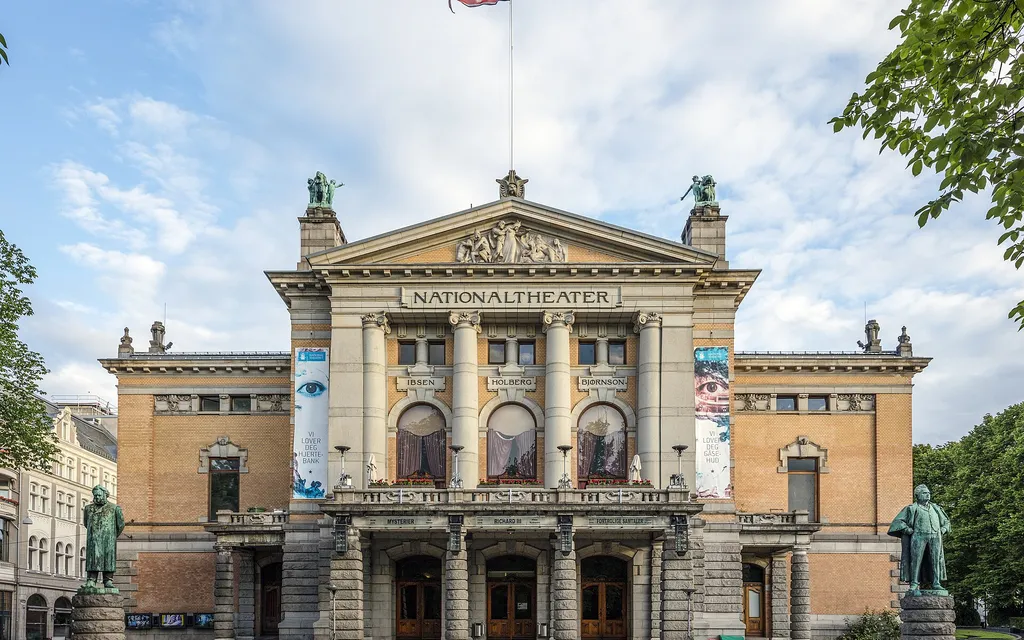
Henrik Ibsen wrote A Doll's House (Et dukkehjem) in 1879. The play ends with Nora leaving her husband and children and slamming the door, and it caused a scandal across Europe. Today Ibsen is one of the most performed playwrights in the world, and his statue stands outside the National Theatre in Oslo.
Knut Hamsun won the Nobel Prize in 1920. Hunger (Sult), from 1890, is counted among the first modern novels. Many Norwegians have a difficult relationship with him, because he supported the Nazis during the war. Sigrid Undset won the Nobel Prize in 1928, mainly for Kristin Lavransdatter, a medieval trilogy that people still read.
Jon Fosse and Karl Ove Knausgård
Jon Fosse won the Nobel Prize in Literature in 2023. He writes in Nynorsk, one of the two written forms of Norwegian, in long sentences with hardly any full stops. Septology is his main work. It's not easy reading for a beginner, but some of his short texts use surprisingly simple vocabulary.
Karl Ove Knausgård became famous for My Struggle (Min kamp), six volumes about his own life in which he wrote openly about family and friends using their real names. That started a big debate in Norway about what a writer is allowed to publish. The books are translated into many languages, so you can read them in your own language first and then in Norwegian.
Munch and Grieg
Edvard Munch painted The Scream (Skrik) in 1893, and he made several versions of the motif. You can see them at the National Museum and at MUNCH, the tall museum in Bjørvika in Oslo that opened in 2021. Munch left most of his art to the city of Oslo in his will, so the collection is huge. The top floor also has a bar with a view of the fjord.
Edvard Grieg wrote the music for Ibsen's Peer Gynt. You probably know In the Hall of the Mountain King and Morning Mood, even if you don't know their names. His home, Troldhaugen in Bergen, is a museum with lunchtime concerts in summer.
Modern Norway: a-ha, Ylvis and Kygo
a-ha broke through with Take On Me in 1985, and the video with its pencil-sketch animation is still one of the best-known music videos ever made. The Ylvisåker brothers, Ylvis, made The Fox in 2013 as a joke for their TV show, and suddenly the whole world was asking what the fox says. Kygo from Bergen became one of the biggest DJs in the world with his mellow tropical house.
If you want to understand Norwegian humour, Ylvis is a good place to start. Much of it is dry, self-mocking and about how awkward (kleint) it is to be Norwegian.
Learn Norwegian with TV: Skam and NRK
Skam ran on NRK from 2015 to 2017 and follows a group of friends at Hartvig Nissen school in Oslo. It was created by Julie Andem and became an international cult hit, remade in several countries. For a learner it's gold: real teenage language, Oslo dialect and short episodes. Be ready for lots of slang and English words.
NRK TV is free in Norway, and many programmes have Norwegian subtitles (norsk teksting). Turn them on instead of subtitles in your own language: you hear and read the same thing at once. Lilyhammer, with Steven Van Zandt as a New York mobster in Lillehammer, is fun because his own Norwegian is bad. Also try children's TV on NRK Super: clear speech and simple vocabulary.
Where to find culture
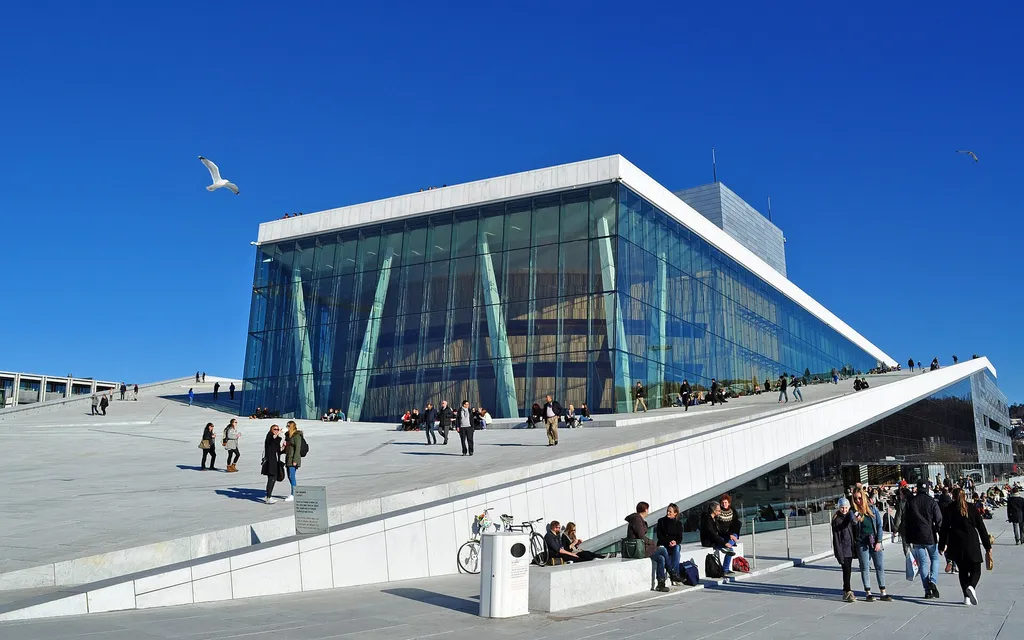
The library is underrated. Norwegian public libraries are free, often have books in many languages, and Deichman Bjørvika in Oslo is one of the finest buildings in the city. Many libraries run a språkkafé, where volunteers chat with you in Norwegian over a cup of coffee.
Start with easy-read books (lettlestbøker). Several publishers put out books in simple Norwegian for adults, with short texts and common words. Once you've read a few, try children's books by Thorbjørn Egner or Anne-Cath. Vestly, which every Norwegian knows. That gives you both the language and the references your colleagues use at lunch.
Useful phrases
- Har du sett Skam?Have you seen Skam?
- Kan du anbefale en god bok?Can you recommend a good book?
- Jeg ser på NRK med norsk teksting.I watch NRK with Norwegian subtitles.
- Hvor kan jeg låne bøker?Where can I borrow books?
- Skal vi gå på Munchmuseet i helgen?Shall we go to the Munch Museum at the weekend?
- Det var en fin konsert.That was a nice concert.
- Hva handler boka om?What is the book about?
- Jeg forstod ikke vitsen.I didn't get the joke.
- Er det billetter igjen?Are there any tickets left?
More about Norway

Norwegian dialects: why everyone speaks differently
Read the article →
Bokmål and Nynorsk: two written languages in one country
Read the article →
Small talk in Norwegian: weather, cabins and ‘takk for sist’
Read the article →
Working life in Norway: packed lunch, July holidays and a flat structure
Read the article →
Public holidays and time off in Norway: red days, fellesferie and holiday pay
Read the article →
The Norwegian year month by month: from dark January to New Year fireworks
Read the article →Skiing for beginners: cross-country, downhill and how to get started
Read the article →Hiking in Norway: a practical guide from planning to the cabin
Read the article →Free time in Norway: cabins, knitting, fishing and club life
Read the article →
Holidays in Norway: 17 May, Christmas, Easter and Midsummer
Read the article →
Everyday Norwegian food: from brown cheese to Taco Friday
Read the article →
Friluftsliv: the right to roam, DNT cabins and mountain sense
Read the article →
The Sámi and Northern Norway: language, culture and Arctic light
Read the article →
Norway's regions, counties and cities
Read the article →
A short history of Norway
Read the article →
NAV, healthcare and tax: what you need to know
Read the article →
Everyday life in Norway: housing, prices and winter
Read the article →
Kindergarten and school in Norway
Read the article →
Sport in Norway
Read the article →
Everyday etiquette in Norway
Read the article →
Office culture in Norway: how an ordinary workday really works
Read the article →
Business in Norway: big companies, social partnership and business culture
Read the article →
Job hunting in Norway: from job ad to employment contract
Read the article →
Starting your own business in Norway: ENK, AS and the paperwork you need
Read the article →
Dating and relationships in Norway: from the first coffee to samboer
Read the article →
Norway's economy explained: oil, the krone, interest rates and jobs in 2026–2027
Read the article →Salaries in Norway: what people earn and how pay works
Read the article →
What does it cost to live in Norway? Rent, food, electricity and budgets for 2026
Read the article →