
Norwegian dialects: why everyone speaks differently
Ask five Norwegians how they say ‘I’ and you may get five answers. Norway has two written standards but no official spoken one, and people use their dialect everywhere: at the bank, in Parliament and on the evening news.

Why there is no ‘correct’ spoken Norwegian
In most European countries the speech of the capital gradually became the norm. Norway went another way. After 400 years of union with Denmark, the written language was Danish, and the educated class in Christiania (Oslo) and Bergen spoke a Danish-coloured Norwegian. When Norwegians started building their own language in the 1800s, many argued that the dialects of farmers and fishermen were the real Norwegian. That idea has survived.
Today no law tells people how to speak. Teachers are not supposed to correct a pupil’s dialect, and children learn to write Bokmål or Nynorsk while speaking the way they do at home. What many call ‘standard East Norwegian’ is simply the speech of the Oslo area. It is common on TV and in textbooks, but it has no official status.
East, west, north and Trøndelag
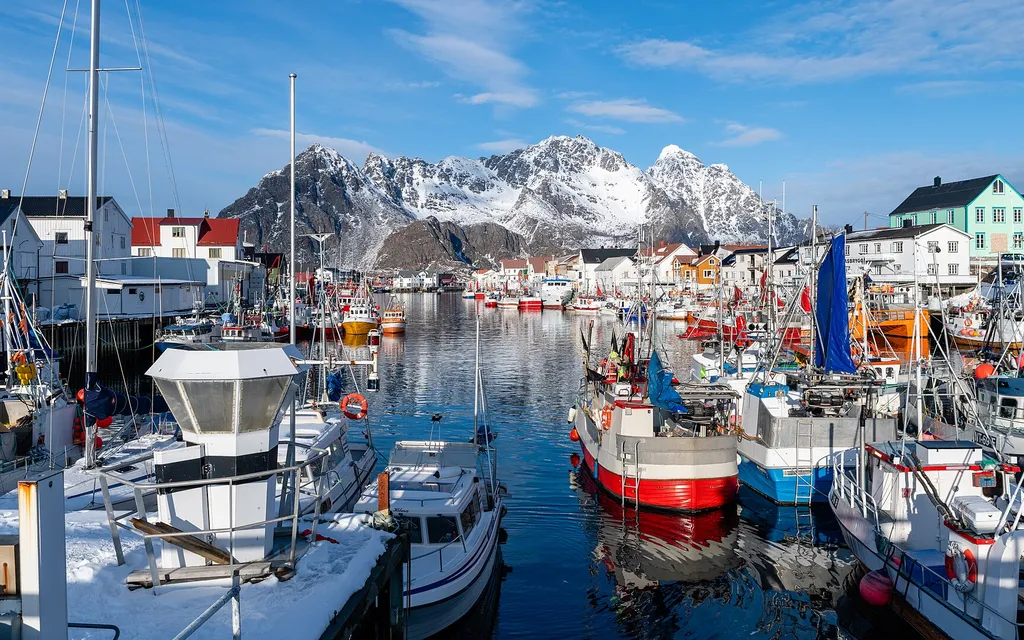
Linguists usually divide the dialects into four groups: East Norwegian, West Norwegian, Trøndersk and North Norwegian. The borders are fuzzy, and one valley can sound different from the next, but a handful of words tell you a lot.
The word jeg (I) is the classic test. In Oslo you hear jeg or ‘jæ’. In Bergen and along much of the west coast it is eg. In Trøndelag and Northern Norway many people say æ or æg, and in parts of the inland east, such as Hedmark and Gudbrandsdalen, you may hear i or je. Ikke (not) varies just as much: ikke in Oslo, ikkje in the west, itj in Trondheim and often ikkje or ikke in the north.
There are grammar differences too. The Bergen dialect has only two genders, because the feminine merged with the masculine, so people there say en bok rather than ei bok. In Trøndersk the ending often disappears: ‘å kast’ instead of å kaste. The question word hva (what) becomes ka in Bergen and kå in Trondheim.
The rolled r and the skarre-r
You will hear two kinds of r. Most of the country uses a rolled or tapped r made with the tip of the tongue. But in a belt along the south and west coast, from Kristiansand and Arendal to Stavanger and Bergen, people use the skarre-r, made at the back of the throat, roughly like French or German. Both are correct, and nobody in Bergen thinks a rolled r sounds strange.
Another feature is the ‘thick l’ (tjukk l), a flapped sound in words like sol (sun) and gul (yellow). It is common in much of Eastern Norway and Trøndelag, and many people in Oslo use it without thinking, although for a long time it was seen as rustic. You don’t have to learn it yourself, but it helps to recognise it.
How to cope as a learner
Pick one model and stick to it. Most textbooks and apps follow East Norwegian, and that is a safe choice for speaking. If you live in Stavanger or Tromsø, you will pick up local words anyway, and that is perfectly fine.
For listening, it pays to learn the most common variants of about twenty high-frequency words: jeg (I), ikke (not), hva (what: ka, kva, kå), hvordan (how: korsn, koss, åssen), vi (we: me, mæ) and hvem (who: kem, kæm). Once you recognise ka in Bergen and kå in Trondheim, half the confusion goes away.
Watch series with Norwegian subtitles. NRK subtitles almost everything, and you switch it on in the NRK TV app. If a colleague from Sunnmøre says something you don’t understand, just ask: ‘Kan du si det en gang til?’ Nobody takes offence. Norwegians struggle with each other’s dialects too, especially those from the inland valleys.
Dialects at work, in Parliament and on NRK
Speaking dialect is not a sign of poor education in Norway. Ministers speak dialect from the rostrum in the Storting, and since the 1970s NRK has let news readers and reporters use their own dialect on air. A weather presenter from Nordland is completely ordinary.
It also means you should not correct or imitate someone’s dialect for fun unless you know the person well. A joke about how people from Bergen talk works among friends, but from a newcomer it can come across as rude. The question ‘Hvor kommer du fra? Jeg hører at du ikke er fra Oslo’ (Where are you from? I can hear you’re not from Oslo), on the other hand, is a good way to start a conversation. People like talking about where they grew up.
Your own accent is part of this picture. Norwegians are used to many ways of speaking, so a Polish or Lithuanian accent is just one more. Clear grammar matters more than a perfect Oslo melody.
Useful phrases
- Hvor kommer du fra?Where are you from?
- Kan du si det en gang til?Could you say that again?
- Kan du snakke litt saktere?Could you speak a bit more slowly?
- Hva betyr det?What does that mean?
- Hvordan sier dere det her?How do you say that here?
- Jeg forstår ikke dialekten din helt ennå.I don’t quite understand your dialect yet.
- Du snakker bergensk, ikke sant?You speak the Bergen dialect, don’t you?
- Jeg lærer østnorsk.I’m learning East Norwegian.
More about Norway

Bokmål and Nynorsk: two written languages in one country
Read the article →
Small talk in Norwegian: weather, cabins and ‘takk for sist’
Read the article →
Working life in Norway: packed lunch, July holidays and a flat structure
Read the article →
Public holidays and time off in Norway: red days, fellesferie and holiday pay
Read the article →
The Norwegian year month by month: from dark January to New Year fireworks
Read the article →Skiing for beginners: cross-country, downhill and how to get started
Read the article →Hiking in Norway: a practical guide from planning to the cabin
Read the article →Free time in Norway: cabins, knitting, fishing and club life
Read the article →
Holidays in Norway: 17 May, Christmas, Easter and Midsummer
Read the article →
Everyday Norwegian food: from brown cheese to Taco Friday
Read the article →
Friluftsliv: the right to roam, DNT cabins and mountain sense
Read the article →
The Sámi and Northern Norway: language, culture and Arctic light
Read the article →
Norway's regions, counties and cities
Read the article →
A short history of Norway
Read the article →
NAV, healthcare and tax: what you need to know
Read the article →
Everyday life in Norway: housing, prices and winter
Read the article →
Kindergarten and school in Norway
Read the article →
Art, literature and music
Read the article →
Sport in Norway
Read the article →
Everyday etiquette in Norway
Read the article →
Office culture in Norway: how an ordinary workday really works
Read the article →
Business in Norway: big companies, social partnership and business culture
Read the article →
Job hunting in Norway: from job ad to employment contract
Read the article →
Starting your own business in Norway: ENK, AS and the paperwork you need
Read the article →
Dating and relationships in Norway: from the first coffee to samboer
Read the article →
Norway's economy explained: oil, the krone, interest rates and jobs in 2026–2027
Read the article →Salaries in Norway: what people earn and how pay works
Read the article →
What does it cost to live in Norway? Rent, food, electricity and budgets for 2026
Read the article →