
Norway's regions, counties and cities
Norway is a long country. Driving from Lindesnes in the south to the North Cape is roughly the same distance as going from Oslo to Rome. Here is a practical overview of the regions, the counties, the biggest cities and why the weather in Bergen and Tromsø has so little in common.

Five regions
Norwegians like to split the country into five regions: Østlandet (Eastern Norway), Sørlandet (Southern Norway), Vestlandet (Western Norway), Trøndelag and Nord-Norge (Northern Norway). They are not administrative units, but people use the words all the time, and they say a lot about dialect, food and mentality.
Østlandet, around the Oslofjord and further inland, has the most people. It has flat farmland, big forests and long valleys such as Gudbrandsdalen and Østerdalen. Sørlandet is the coast from Arendal to Lindesnes, known for white wooden houses and summer holidays among the skerries. Vestlandet has the fjords, high mountains and plenty of rain. Trøndelag sits in the middle of the country around the Trondheimsfjord, and Nord-Norge stretches from Nordland all the way to the Russian border.
15 counties since 2024
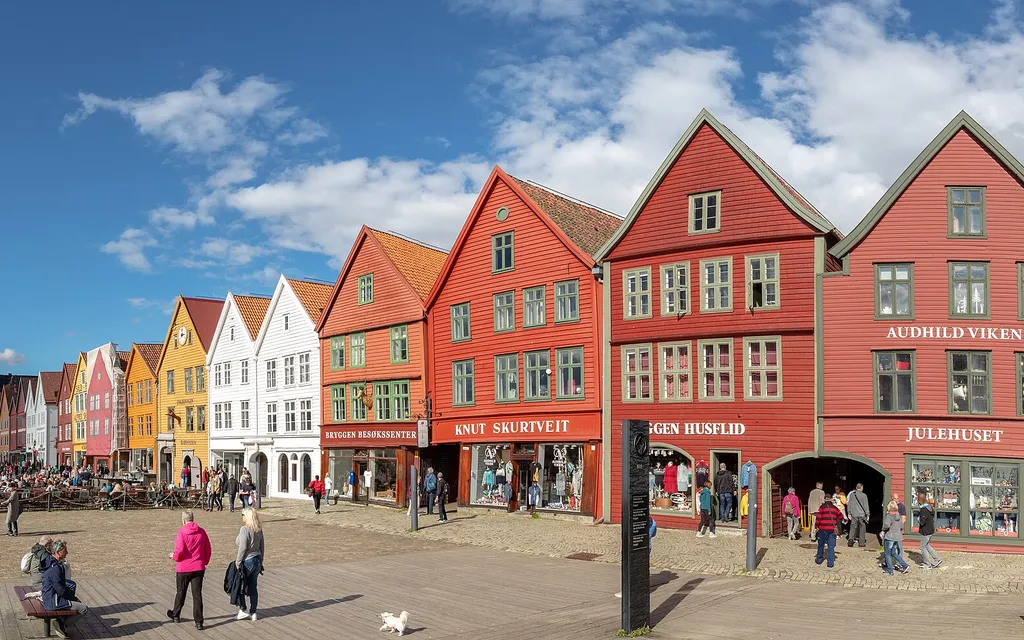
The county map has changed twice in a short time. In 2020, 19 counties were merged into 11. Several mergers were unpopular, and from 1 January 2024 some of them were split again. Norway now has 15 counties: Oslo, Akershus, Østfold, Buskerud, Innlandet, Vestfold, Telemark, Agder, Rogaland, Vestland, Møre og Romsdal, Trøndelag, Nordland, Troms and Finnmark.
For a newcomer, the main consequence is that older websites and forms may still use names like Viken or Troms og Finnmark, which no longer exist. The county authority (fylkeskommune) runs upper secondary schools, county roads and much of the public transport. Your municipality (kommune), which is much closer to you, handles kindergartens, primary schools, the GP scheme and the out-of-hours clinic.
The biggest cities
Oslo is the capital and by far the largest city, home to the Storting (parliament), the ministries and most big head offices. Bergen is number two, the city between seven mountains, with Bryggen, the fish market and a reputation for rain. Trondheim has NTNU, Nidaros Cathedral and lots of students. Stavanger grew with oil and is still the centre of the energy industry. Tromsø is the largest city in Northern Norway, with a university, northern lights in winter and midnight sun in summer.
The cities are small by European standards. Even in Oslo you are in the forest quickly: the metro takes you to Frognerseteren or Sognsvann in half an hour. Many newcomers come to love this, and Norwegians use the surrounding forest, marka, all year round.
Fjords, mountains and climate
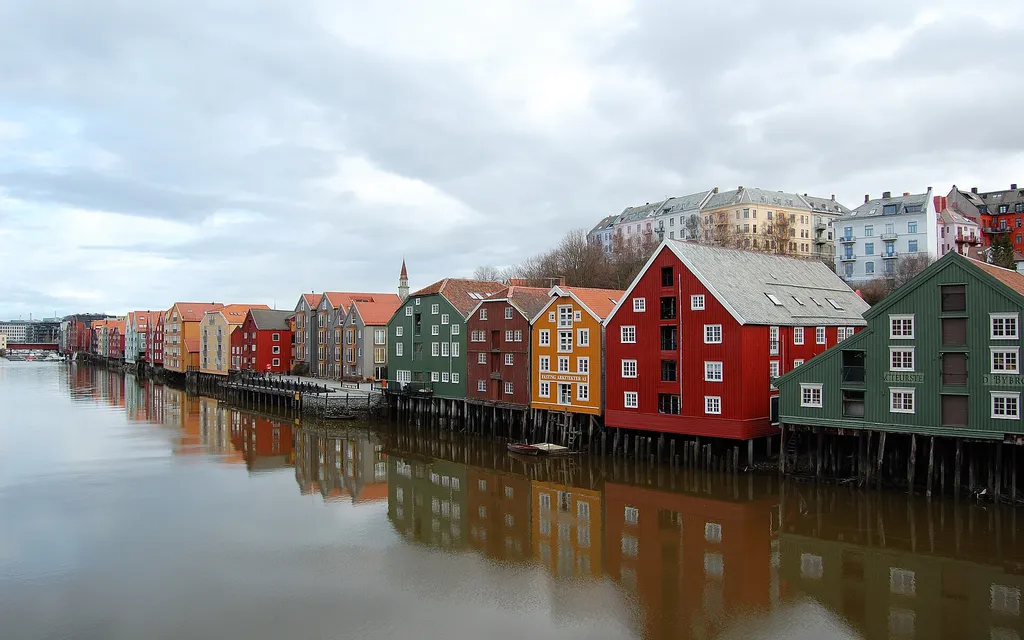
The fjords were carved by glaciers during the ice ages. Sognefjorden is the longest, over 200 kilometres, and Geirangerfjorden and Nærøyfjorden are on the UNESCO World Heritage list. Inland you find Jotunheimen with Galdhøpiggen, the country's highest mountain, and Hardangervidda, one of the largest mountain plateaus in Europe.
The climate varies more than people expect. The Gulf Stream keeps the coast ice-free and gives mild, wet winters in the west. Bergen can have rain for weeks, while Oslo and Østlandet have colder, drier winters and warmer summers. Inland towns such as Røros can get severe cold. The north has long, snowy winters, but the coast is milder than its latitude suggests. Check yr.no – it is the weather app every Norwegian uses.
Northern Norway and Svalbard
North of the Arctic Circle, which crosses Nordland just south of Bodø, you get midnight sun in summer and polar night (mørketid) in winter. Lofoten is known for stockfish, rorbu fishing cabins and steep mountains rising straight out of the sea. Many Sami live in Finnmark and Troms, and in Kautokeino and Karasjok Sami is an everyday language.
Svalbard is an archipelago far out in the Arctic Ocean, halfway between the mainland and the North Pole. It is Norwegian, but the Svalbard Treaty of 1920 gives citizens of the signatory countries the right to live and work there. Longyearbyen is the largest settlement. Svalbard is not part of Schengen, and you must support yourself: people without work or housing can be asked to leave. Outside the settlements you need protection against polar bears. That is why nobody in Longyearbyen looks twice at someone with a rifle on their back.
Useful phrases
- Hvor kommer du fra?Where are you from?
- Jeg bor på Østlandet.I live in Eastern Norway.
- Hvilket fylke ligger det i?Which county is it in?
- Det regner alltid i Bergen.It always rains in Bergen.
- Hvor lang tid tar det å kjøre dit?How long does it take to drive there?
- Vi skal på hytta i helgen.We are going to the cabin this weekend.
- Har du sett nordlyset?Have you seen the northern lights?
- Hva sier yr om været i morgen?What does yr say about tomorrow's weather?
More about Norway

Norwegian dialects: why everyone speaks differently
Read the article →
Bokmål and Nynorsk: two written languages in one country
Read the article →
Small talk in Norwegian: weather, cabins and ‘takk for sist’
Read the article →
Working life in Norway: packed lunch, July holidays and a flat structure
Read the article →
Public holidays and time off in Norway: red days, fellesferie and holiday pay
Read the article →
The Norwegian year month by month: from dark January to New Year fireworks
Read the article →Skiing for beginners: cross-country, downhill and how to get started
Read the article →Hiking in Norway: a practical guide from planning to the cabin
Read the article →Free time in Norway: cabins, knitting, fishing and club life
Read the article →
Holidays in Norway: 17 May, Christmas, Easter and Midsummer
Read the article →
Everyday Norwegian food: from brown cheese to Taco Friday
Read the article →
Friluftsliv: the right to roam, DNT cabins and mountain sense
Read the article →
The Sámi and Northern Norway: language, culture and Arctic light
Read the article →
A short history of Norway
Read the article →
NAV, healthcare and tax: what you need to know
Read the article →
Everyday life in Norway: housing, prices and winter
Read the article →
Kindergarten and school in Norway
Read the article →
Art, literature and music
Read the article →
Sport in Norway
Read the article →
Everyday etiquette in Norway
Read the article →
Office culture in Norway: how an ordinary workday really works
Read the article →
Business in Norway: big companies, social partnership and business culture
Read the article →
Job hunting in Norway: from job ad to employment contract
Read the article →
Starting your own business in Norway: ENK, AS and the paperwork you need
Read the article →
Dating and relationships in Norway: from the first coffee to samboer
Read the article →
Norway's economy explained: oil, the krone, interest rates and jobs in 2026–2027
Read the article →Salaries in Norway: what people earn and how pay works
Read the article →
What does it cost to live in Norway? Rent, food, electricity and budgets for 2026
Read the article →