
The Norwegian year month by month: from dark January to New Year fireworks
Norway runs on a seasonal rhythm that nobody explains to you. One week the office is empty because of winter break, the next everyone talks about crab or chanterelles. Here is the year as Norwegians live it – with dates, food and things you can join in.

January and February: darkness, buns and winter break
January is long. The Christmas money is spent, and the shops have januarsalg, which starts right after Christmas. Many keep the Christmas tree until 13 January, tjuendedag jul, when Christmas is traditionally over. In Tromsø the sun has been below the horizon since late November, and on 21 January the town celebrates soldagen with solboller, buns with a yellow custard centre.
6 February is Samefolkets dag, the Sámi national day and an official flag day. The second Sunday in February is Mother’s Day – earlier than in most countries, so set a reminder.
Seven weeks before Easter comes fastelavn. Bakeries sell fastelavnsboller, buns filled with whipped cream and dusted with icing sugar, and Sanitetskvinnene sell fastelavnsris, birch twigs with coloured feathers, to raise money for women’s health. Kindergartens hold a carnival, so your child will need a costume. Then comes vinterferie, a week off school for skiing and the cabin: in 2027 most counties have it in week 8, Buskerud and parts of Vestland in week 9, and Rogaland already in week 7.
March and April: light, skiing and Easter
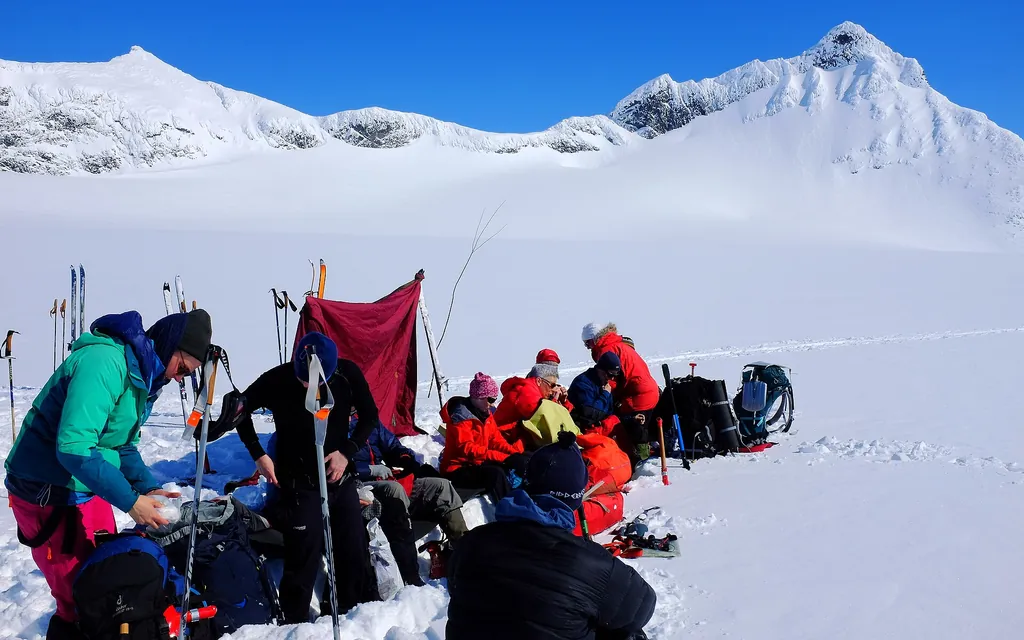
In March the light returns fast, and on sunny weekends the ski tracks around the towns are full. Easter falls in March or April. Schools close for the whole Easter week, and children get a påskeegg – not a chocolate egg but a cardboard egg filled with sweets. Yellow is the colour of the season: chicks, daffodils and napkins.
Spring is also dugnad time in housing cooperatives: on a Saturday everyone rakes, sweeps and washes together, and afterwards there are hot dogs. Go even if your Norwegian is shaky – it is the easiest way to meet the neighbours.
May: russ, 17 May and hot dogs
Final-year pupils at upper secondary school, the russ, celebrate in red or blue overalls and hand out russekort, cards that small children collect. The party used to run from about 20 April to 17 May, before the exams. Since 2026 the written exams come earlier and the celebration has moved to after them; in 2027 many counties plan it from 14 to 23 May.
17 May starts early. Many families invite friends for breakfast: scrambled eggs, smoked salmon, cured meat and fresh rolls, often with something sparkling. Then comes the barnetog, the children’s parade, school by school behind the school band. If your child is at school, walk with the class or wave from the pavement. You do not need a bunad – wear your nicest clothes, or a national costume from your home country.
In the afternoon the school yard becomes a fair run by parents: sack races, egg-and-spoon races, a lottery wheel, ice cream, hot dogs and cake. Bring cash or Vipps. If you are asked to help at a stall for an hour, say yes – it is how you get to know other families.
June and July: bonfires, light nights and fellesferie
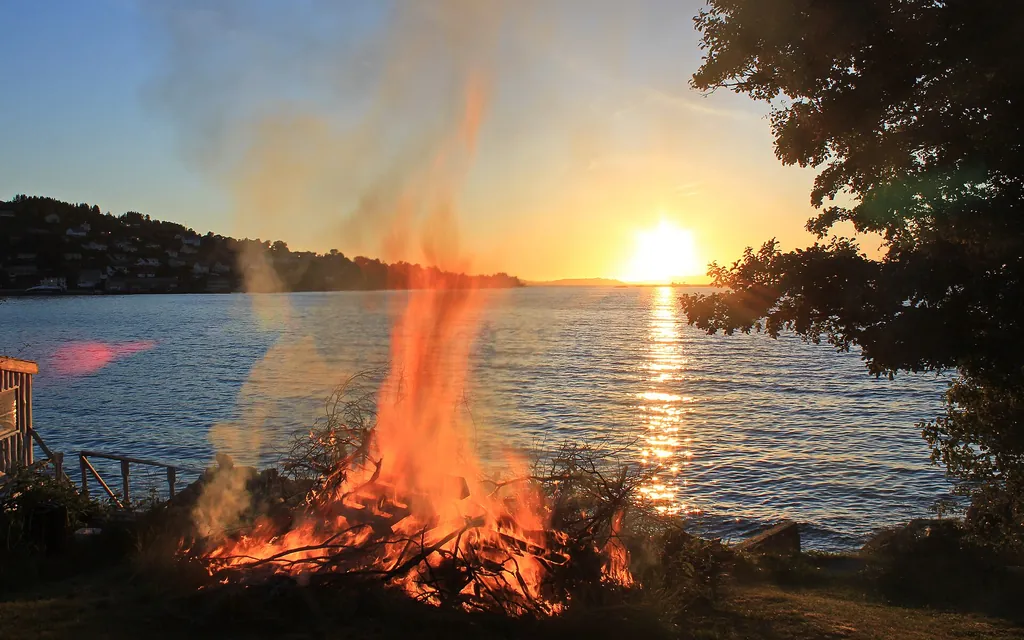
Sankthansaften, 23 June, is the evening of bonfires by the water. From 15 April to 15 September you may not light fires in or near forest and other uncultivated land unless there is clearly no risk, so the big bonfires are usually arranged by a club, a housing cooperative or the municipality. Join one of them rather than lighting your own on the beach.
School ends in the second half of June, and in Tromsø the midnight sun lasts from about 20 May to 22 July. In July comes fellesferie, usually weeks 28–30. Many workplaces close, people move to cabins and campsites, and the cities feel empty. If you stay at home, enjoy it: free tables at cafés and empty seats on the bus.
August and September: crab, berries and mushrooms
School starts in mid-August, and the evenings get dark again. Now it is krabbesesong: brown crabs are fullest in late summer and autumn, and a typical Friday dinner is a pile of crabs with white bread, mayonnaise and lemon. Buy them at the fish counter or set your own pots – at most 20 per person, marked with your name and address and fitted with escape holes.
Allemannsretten lets you pick berries and mushrooms in the forest. Blueberries ripen in July and August, lingonberries (tyttebær) from late August, and chanterelles (kantareller) appear from July into September. Cloudberries (multer) are the exception: in Nordland, Troms and Finnmark the landowner can ban picking them, though you may always eat them on the spot. Never eat a mushroom you are not completely sure about. Many towns have a free soppkontroll, and Giftinformasjonen, the poison information centre, answers day and night on 22 59 13 00.
On 25 September the moose hunt starts in most of the country, so wear something bright if you walk in the forest.
October and November: autumn break, Halloween and Father’s Day
In early October schools have høstferie, once called potetferie because children helped to dig up potatoes. Oslo and some other counties take week 40, many others week 41 – check your municipality’s skolerute. On 1 October at 08:00 the lobster season opens; if you want to fish for lobster, you must register with the Directorate of Fisheries every year.
Halloween on 31 October came to Norway around the year 2000 and is now big with children, who go from door to door saying «knask eller knep». Put a lit pumpkin outside if you want visitors. The first Sunday in November is allehelgensdag, when cemeteries fill with candles, and Father’s Day (farsdag) is the second Sunday in November. From mid-November the julebord season begins. Go to yours even if you do not drink: alcohol-free drinks are normal, and leaving early is fine.
December: Advent, Lucia, lutefisk and fireworks
Advent starts four Sundays before Christmas. Families light one more candle in the advent candlestick each Sunday, put an electric candlestick with seven lights and a paper star in the window, and give children a calendar with a small present for every day until the 24th.
On 13 December it is Lucia: in kindergartens and schools children walk in a procession in white gowns, holding candles and singing «Santa Lucia», and there are lussekatter, saffron buns with raisins. Lutefisk season runs from late autumn to Christmas, in restaurants and at club dinners; many people eat it only once a year. In Bergen you can see Pepperkakebyen, the world’s largest gingerbread town, built every year since 1991.
On New Year’s Eve the King gives his speech on TV at 19:30, and at midnight the sky explodes. You may buy fireworks from 27 to 31 December if you are at least 18, and use them only on New Year’s Eve between 18:00 and 02:00. Rockets with a stick are banned for private use, and many municipalities forbid fireworks in parts of town. Godt nytt år!
Useful phrases
- Skal du på hytta i vinterferien?Are you going to the cabin in the winter break?
- Har du smakt fastelavnsboller?Have you tasted fastelavnsboller?
- Kommer du på 17. mai-frokost hos oss?Will you come to our 17 May breakfast?
- Hvor går barnetoget?Where does the children’s parade go?
- Skal vi gå på sankthansbålet i kveld?Shall we go to the Midsummer bonfire tonight?
- Er denne soppen spiselig?Is this mushroom edible?
- Vi plukket blåbær i helgen.We picked blueberries at the weekend.
- Knask eller knep!Trick or treat!
- Kommer du på julebordet?Are you coming to the Christmas party?
- Godt nytt år, og takk for det gamle!Happy New Year, and thanks for the old one!
More about Norway

Norwegian dialects: why everyone speaks differently
Read the article →
Bokmål and Nynorsk: two written languages in one country
Read the article →
Small talk in Norwegian: weather, cabins and ‘takk for sist’
Read the article →
Working life in Norway: packed lunch, July holidays and a flat structure
Read the article →
Public holidays and time off in Norway: red days, fellesferie and holiday pay
Read the article →Skiing for beginners: cross-country, downhill and how to get started
Read the article →Hiking in Norway: a practical guide from planning to the cabin
Read the article →Free time in Norway: cabins, knitting, fishing and club life
Read the article →
Holidays in Norway: 17 May, Christmas, Easter and Midsummer
Read the article →
Everyday Norwegian food: from brown cheese to Taco Friday
Read the article →
Friluftsliv: the right to roam, DNT cabins and mountain sense
Read the article →
The Sámi and Northern Norway: language, culture and Arctic light
Read the article →
Norway's regions, counties and cities
Read the article →
A short history of Norway
Read the article →
NAV, healthcare and tax: what you need to know
Read the article →
Everyday life in Norway: housing, prices and winter
Read the article →
Kindergarten and school in Norway
Read the article →
Art, literature and music
Read the article →
Sport in Norway
Read the article →
Everyday etiquette in Norway
Read the article →
Office culture in Norway: how an ordinary workday really works
Read the article →
Business in Norway: big companies, social partnership and business culture
Read the article →
Job hunting in Norway: from job ad to employment contract
Read the article →
Starting your own business in Norway: ENK, AS and the paperwork you need
Read the article →
Dating and relationships in Norway: from the first coffee to samboer
Read the article →
Norway's economy explained: oil, the krone, interest rates and jobs in 2026–2027
Read the article →Salaries in Norway: what people earn and how pay works
Read the article →
What does it cost to live in Norway? Rent, food, electricity and budgets for 2026
Read the article →