
Kindergarten and school in Norway
If you move to Norway with children, a big part of your new life will happen around the barnehage and the school gate. The system is simple once you see how it works, but it comes with plenty of unwritten rules. This is what I wish someone had told me in my first year.

Barnehage from the age of one
Most Norwegian children start barnehage around their first birthday, when parental leave runs out. Children who turn one by the end of November have a legal right to a place from August. You apply through your kommune, usually by 1 March for the main intake.
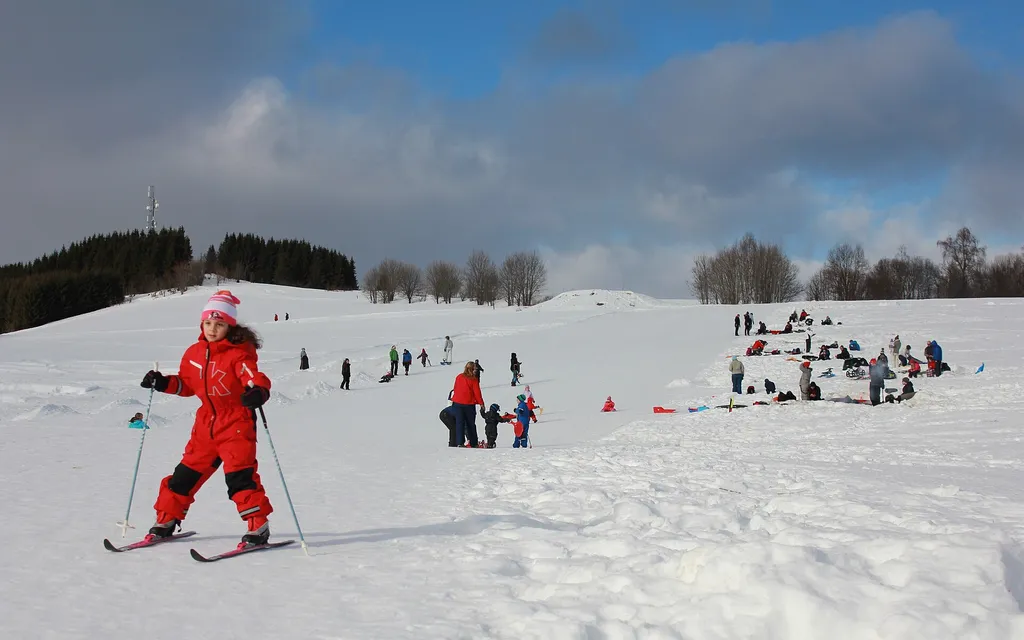
Barnehage is not school. The kids play, spend time outdoors almost every day whatever the weather, and pick up Norwegian through songs, circle time (samling) and trips. For children who don't speak Norwegian at home, it is often the fastest way into the language.
What does it cost?
The state sets a maximum price (maksimalpris) for a full-time place, and it has been lowered several times in recent years. Check the current figure on your kommune's website. Food money (matpenger) is often added on top.
There is also a sibling discount, and families with low income can apply for reduced fees and free core hours (gratis kjernetid). Many newcomers don't know this and pay the full price for months. The application is online and takes ten minutes.
Primary, lower secondary and upper secondary
Children start school in August of the year they turn six. Barneskole runs from grade 1 to 7, ungdomsskole from 8 to 10. Those ten years are compulsory and free. After that comes videregående, usually three years, either general studies or a vocational track with an apprenticeship in a company.
What surprises many parents: there are no grades until ungdomsskole. In barneskole children get spoken and written feedback, and you meet the teacher for a progress talk (utviklingssamtale) twice a year. Grades from year 10 decide which upper secondary school a pupil gets into.
The last spring of videregående is russetid. Pupils wear red or blue overalls (russebukser), and the celebrations peak on 17 May. Many parents are unsure how much spending is normal, and it's fine to say no to a party bus (russebuss) that costs several hundred thousand kroner.
Matpakke, outdoor days and wool
There is usually no hot school lunch. Children bring a matpakke: open sandwiches with toppings (pålegg), wrapped in paper or packed in a box. Schools often say no to sweets and fizzy drinks, and some barnehager have sugar-free days. Many schools let you order school milk and fruit.
On an utedag, or turdag in barnehage, the children are outside all day. They need wool underwear, rain gear, spare mittens and a change of clothes. Label everything with a name. When staff tell you your child was cold, it's not a criticism of you. It just means the clothes were wrong.
Parent meetings, FAU and SFO
Foreldremøte is usually held in the evening in the classroom, a couple of times a year. Go, even if you don't understand everything. That's where you get to know the other parents, and where things like birthday rules and class trips get decided. Each class picks class contacts (klassekontakter), and the school has a parents' council called FAU.
SFO, called AKS in Oslo, is the before- and after-school programme for grades 1 to 4. The first grades get a number of free hours a week. Messages from school come through an app, often Vigilo, Visma or Transponder, so download it on day one.
Tips for parents
Birthdays are a chapter of their own. In many classes the rule is that you invite all the girls, all the boys or the whole class, so nobody is left out. The present is often an agreed sum, say 50 or 100 kroner, or a joint gift.
Talk to the teacher if something is wrong, and do it early. Norwegian teachers expect parents to get in touch, and they don't like hearing about problems for the first time in June. Ask whether your child can get mother-tongue teaching or extra Norwegian lessons. And don't be afraid to use simple Norwegian at the parents' meeting: the other parents appreciate that you try.
Useful phrases
- Jeg vil søke om barnehageplass.I'd like to apply for a kindergarten place.
- Når blir barnet hentet i dag?When will the child be picked up today?
- Hun er syk og blir hjemme i dag.She is sick and staying at home today.
- Hva trenger han å ha med på turdagen?What does he need to bring on the trip day?
- Kan vi avtale en samtale?Can we arrange a meeting?
- Jeg forstod ikke alt på foreldremøtet.I didn't understand everything at the parents' meeting.
- Hvordan har dagen vært?How has the day been?
- Vi har glemt matpakken.We forgot the packed lunch.
- Er det greit om hun kommer på besøk etter skolen?Is it okay if she comes over after school?
More about Norway

Norwegian dialects: why everyone speaks differently
Read the article →
Bokmål and Nynorsk: two written languages in one country
Read the article →
Small talk in Norwegian: weather, cabins and ‘takk for sist’
Read the article →
Working life in Norway: packed lunch, July holidays and a flat structure
Read the article →
Public holidays and time off in Norway: red days, fellesferie and holiday pay
Read the article →
The Norwegian year month by month: from dark January to New Year fireworks
Read the article →Skiing for beginners: cross-country, downhill and how to get started
Read the article →Hiking in Norway: a practical guide from planning to the cabin
Read the article →Free time in Norway: cabins, knitting, fishing and club life
Read the article →
Holidays in Norway: 17 May, Christmas, Easter and Midsummer
Read the article →
Everyday Norwegian food: from brown cheese to Taco Friday
Read the article →
Friluftsliv: the right to roam, DNT cabins and mountain sense
Read the article →
The Sámi and Northern Norway: language, culture and Arctic light
Read the article →
Norway's regions, counties and cities
Read the article →
A short history of Norway
Read the article →
NAV, healthcare and tax: what you need to know
Read the article →
Everyday life in Norway: housing, prices and winter
Read the article →
Art, literature and music
Read the article →
Sport in Norway
Read the article →
Everyday etiquette in Norway
Read the article →
Office culture in Norway: how an ordinary workday really works
Read the article →
Business in Norway: big companies, social partnership and business culture
Read the article →
Job hunting in Norway: from job ad to employment contract
Read the article →
Starting your own business in Norway: ENK, AS and the paperwork you need
Read the article →
Dating and relationships in Norway: from the first coffee to samboer
Read the article →
Norway's economy explained: oil, the krone, interest rates and jobs in 2026–2027
Read the article →Salaries in Norway: what people earn and how pay works
Read the article →
What does it cost to live in Norway? Rent, food, electricity and budgets for 2026
Read the article →