
Norway's economy explained: oil, the krone, interest rates and jobs in 2026–2027
Norway is a small country with an unusually large savings account. Supermarket prices, the interest on your mortgage and your chances of getting a job are all linked to oil, the krone and interest rates. Here are the key figures as of October 2026, each with its source and year, so you can look up newer numbers yourself later.

Oil, gas and the oil fund
Since the 1970s, oil and gas have been the backbone of the Norwegian economy. According to Statistics Norway (SSB), crude oil and natural gas made up 57% of the value of all Norwegian goods exports in 2025. Natural gas brought in NOK 568.2 billion and crude oil NOK 437.0 billion that year.
The state's income from oil and gas does not go straight into the budget. It is paid into the Government Pension Fund Global, which most people call the oil fund. The fund is managed by Norges Bank Investment Management (NBIM) and was worth NOK 22,683 billion at the end of June 2026, according to NBIM.
How much politicians may spend is governed by the fiscal rule, handlingsregelen. It says that, over time, spending of oil money should follow the expected real return on the fund, estimated at 3% (regjeringen.no). In the budget proposal for 2027, presented on 7 October 2026, the government plans to use NOK 608.4 billion from the fund. That equals 2.7% of the fund's value, and the fund now pays for more than a quarter of the state budget (National Budget 2027). For you, this means schools, hospitals and kindergartens are partly paid for by the fund, but the rule is also meant to stop too much money from pushing prices up.
Seafood, energy, shipping and industry
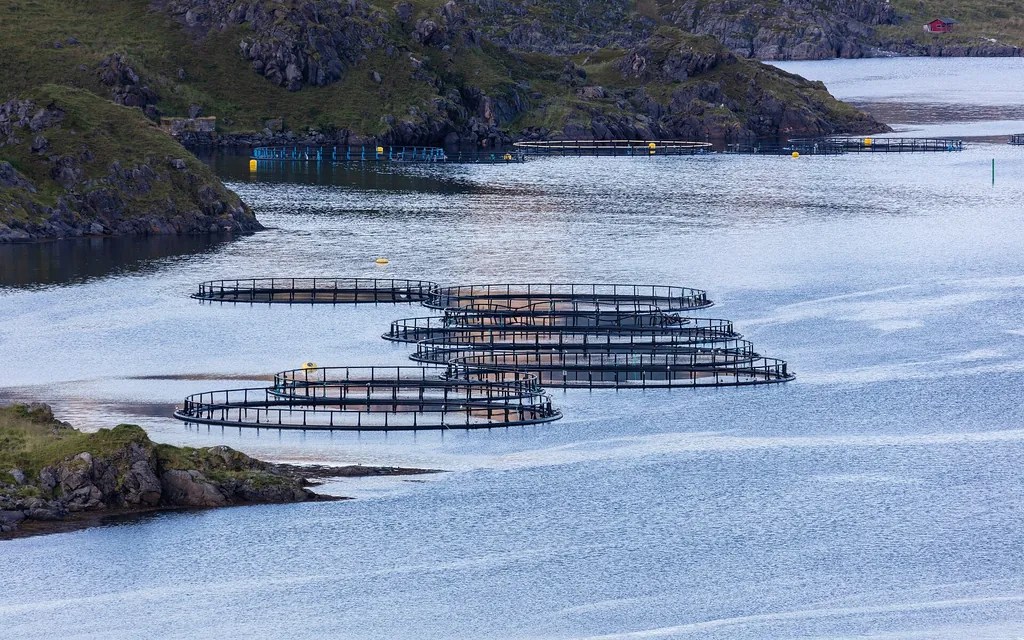
Exports from the mainland, meaning everything except oil, gas, ships and platforms, came to NOK 765.6 billion in 2025, 7.7% more than the year before (SSB). Seafood is the largest part. Norway exported fish worth NOK 173.9 billion in 2025, another record year. Salmon alone brought in NOK 124.3 billion, or 71.5% of fish exports.
Norway is also a major shipping nation, with shipowners, shipyards and suppliers along the whole coast, especially in western Norway. Hydropower gives the country plenty of electricity, and in 2025 Norway exported power worth around NOK 27 billion (SSB). Europe is the main market: 86% of export value went there in 2025, and the United Kingdom was the largest buyer (SSB). The United States has raised tariffs on a large share of imports from Norway. The government considers the effect moderate in the short term, but says it may be considerable for some businesses (National Budget 2027).
What does this mean for you? Many immigrants work in fish processing, at shipyards or in energy-related construction, for example on Frøya, in Lofoten or around Ålesund. These jobs follow export markets. On its own, a stronger krone leaves exporters with fewer kroner for what they sell (SSB).
The krone: why the exchange rate matters to you
Norway has its own currency, and the exchange rate is set by the market. In 2025, one euro cost on average NOK 11.72 and one US dollar NOK 10.39, according to Norges Bank. On 16 October 2026, the rate was NOK 10.62 per euro and NOK 9.44 per dollar. According to the National Budget 2027, the import-weighted krone was about 8% stronger than at the start of the year. The government links this to higher oil and gas prices after the war in the Middle East and to a wider interest-rate gap with other countries.
If you send money home, you feel this directly. NOK 10,000 bought you about 853 euros at the 2025 average rate, but around 941 euros at the rate on 16 October 2026. A strong krone also makes imported goods such as clothes, electronics and cars cheaper, which slows inflation. Exporters, on the other hand, get less back in kroner.
The rate can turn quickly. Norges Bank writes that a fall in the oil price could give a weaker krone than expected (Monetary Policy Report 3/2026). You can find today's rate on norges-bank.no under exchange rates (valutakurser).
Inflation and interest rates: Norges Bank tightens
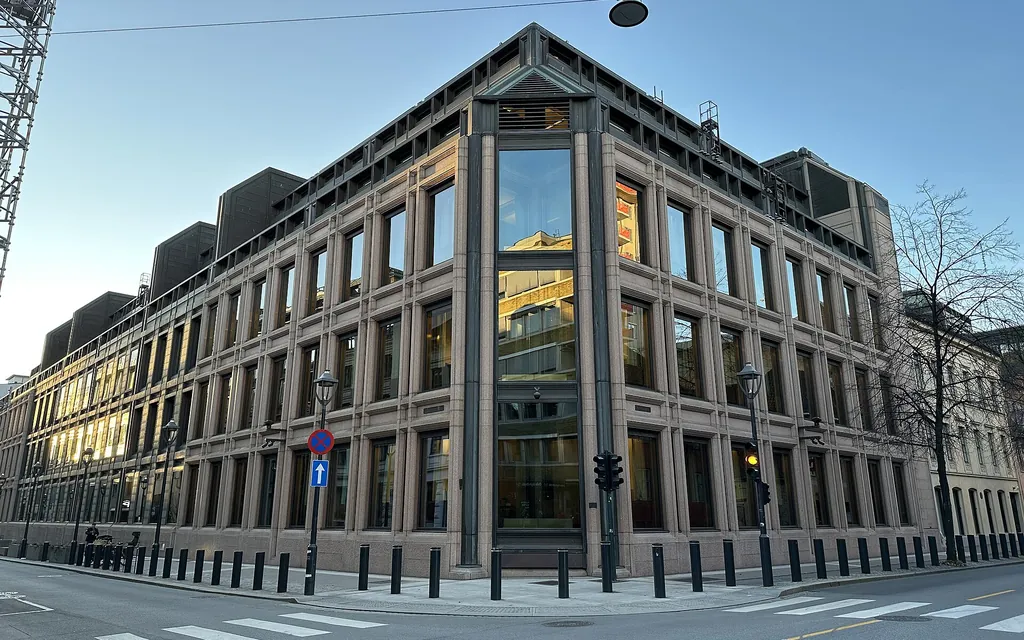
Prices are still rising faster than the target. From September 2025 to September 2026, the consumer price index (CPI) rose by 3.4%, while underlying inflation, CPI-ATE, was 3.0% (SSB, 9 October 2026). Norges Bank's job is to keep inflation close to 2% over time. According to the bank, large pay rises in recent years and rising rents have helped keep inflation up.
That is why interest rates have gone up in 2026. At the start of the year, the policy rate was 4%. In May it was raised to 4.25%, and at the meeting on 23 September 2026 it went up to 4.5% (Norges Bank). The bank expects to keep the rate high for some time, and in its forecast it averages 4.6% in 2027 (Monetary Policy Report 3/2026). The next rate decision is announced on 5 November 2026.
For you, this means more expensive loans. Many mortgages in Norway have a floating rate, so banks often follow when the policy rate changes, and your monthly payment rises. If you have savings, you earn more interest in return. On finansportalen.no you can compare rates on loans and savings accounts.
Unemployment: two figures that look different
NAV counts the people registered as job seekers. At the end of September 2026, 59,400 people were registered as fully unemployed, 2.0% of the labour force. Another 22,900 were partly unemployed and 12,800 were on labour-market schemes, 95,200 job seekers in total, or 3.2% (NAV, October 2026). Unemployment rose most in engineering and ICT.
SSB measures unemployment with a survey, the Labour Force Survey (AKU). Here unemployment was 4.5% in August 2026 (SSB). The figure is higher because AKU counts everyone who has actively looked for work and can start, including students and people not registered with NAV.
The labour market is large: there were just under 3.2 million jobs in Norway in the second quarter of 2026. Health and social services is the biggest industry, with one job in five, followed by retail, education and construction (SSB). If you are out of work, register as a job seeker on nav.no, even if you are not entitled to unemployment benefit.
The forecasts for 2026 and 2027
Norges Bank, SSB and the government each make their own forecasts. The growth figures below refer to mainland GDP, meaning the economy excluding oil, gas and ocean shipping.
Norges Bank (Monetary Policy Report 3/2026, September): growth of 0.9% in 2026 and 1.0% in 2027. Registered unemployment rises from 2.1% to 2.3% in 2027. Underlying inflation (CPI-ATE) falls from 3.0% to 2.7%, and wage growth from 4.4% to 4.0%.
SSB (Konjunkturtendensene, September 2026): growth of 1.4% in 2026 and 2.1% in 2027. AKU unemployment goes from 4.6% to 4.4%, CPI from 3.2% to 2.5% and annual wage growth from 4.3% to 3.7%. The government (National Budget 2027, October 2026): growth of 1.1% in 2026 and 1.7% in 2027, registered unemployment steady at 2.1%, CPI down from 3.3% to 2.7%, and annual wages up 4.6% in 2026 and 4.0% in 2027.
The common picture is an economy growing slowly, unemployment staying low or rising slightly, and inflation coming down gradually. Wages are expected to rise faster than prices in both years, so purchasing power goes up. Forecasts change several times a year, so check the latest reports on norges-bank.no, ssb.no and regjeringen.no.
Which industries are growing, and what does it mean for you as a job seeker?
The biggest need is in health and care. In NAV's business survey for 2026, employers were short of around 33,750 people. The shortage was largest in health, nursing and care, at 9,200 people, and among individual occupations the biggest gaps were for health workers (helsefagarbeidere, 3,650) and nurses (1,850). Many of the other shortages were in jobs that require a trade certificate (fagbrev). Vestland lacked the most people (6,300), followed by Rogaland (3,750) and Nordland (2,950).
Other growth areas are defence and data centres, which according to Norges Bank are lifting activity in several industries. The government puts defence spending at 3.4% of GDP in 2027 and expects investment in power supply to boost growth in 2027 and 2028 (National Budget 2027). House building is weaker: housing investment fell by 12.2% in 2024 and 3.6% in 2025 (SSB), and Norges Bank describes activity in construction as low. Petroleum investment is expected to fall by 2.0% in 2026 and 4.0% in 2027 (National Budget 2027), and NAV reports rising unemployment in engineering and ICT.
What can you do? In health care, a trade certificate as a health worker or authorisation as a nurse is the safest route, and good Norwegian is almost always required. In the building trades, renovation, the power grid and public projects may be safer than new homes. And be open to moving to where the shortage is biggest, often outside Oslo.
Sources: ssb.no (consumer price index, Labour Force Survey, external trade in goods, Konjunkturtendensene, number of jobs), norges-bank.no (rate decision September 2026, Monetary Policy Report 3/2026, exchange rates), nbim.no (fund value), regjeringen.no (National Budget 2027, fiscal rule), nav.no (fully unemployed September 2026, Business Survey 2026), finansportalen.no.
Useful phrases
- Renta har gått opp igjen.The interest rate has gone up again.
- Prisene stiger raskere enn lønna mi.Prices are rising faster than my pay.
- Hvor mange kroner koster en euro i dag?How many kroner does one euro cost today?
- Jeg er registrert som arbeidssøker hos Nav.I'm registered as a job seeker with NAV.
- Bransjen mangler folk med fagbrev.The industry is short of people with a trade certificate.
- Boliglånet mitt har flytende rente.My mortgage has a floating interest rate.
- Jeg sender penger hjem hver måned.I send money home every month.
- Hva betyr handlingsregelen?What does the fiscal rule mean?
- Økonomien vokser sakte i år.The economy is growing slowly this year.
- Det er stor mangel på helsefagarbeidere.There is a big shortage of health workers.
More about Norway

Norwegian dialects: why everyone speaks differently
Read the article →
Bokmål and Nynorsk: two written languages in one country
Read the article →
Small talk in Norwegian: weather, cabins and ‘takk for sist’
Read the article →
Working life in Norway: packed lunch, July holidays and a flat structure
Read the article →
Public holidays and time off in Norway: red days, fellesferie and holiday pay
Read the article →
The Norwegian year month by month: from dark January to New Year fireworks
Read the article →Skiing for beginners: cross-country, downhill and how to get started
Read the article →Hiking in Norway: a practical guide from planning to the cabin
Read the article →Free time in Norway: cabins, knitting, fishing and club life
Read the article →
Holidays in Norway: 17 May, Christmas, Easter and Midsummer
Read the article →
Everyday Norwegian food: from brown cheese to Taco Friday
Read the article →
Friluftsliv: the right to roam, DNT cabins and mountain sense
Read the article →
The Sámi and Northern Norway: language, culture and Arctic light
Read the article →
Norway's regions, counties and cities
Read the article →
A short history of Norway
Read the article →
NAV, healthcare and tax: what you need to know
Read the article →
Everyday life in Norway: housing, prices and winter
Read the article →
Kindergarten and school in Norway
Read the article →
Art, literature and music
Read the article →
Sport in Norway
Read the article →
Everyday etiquette in Norway
Read the article →
Office culture in Norway: how an ordinary workday really works
Read the article →
Business in Norway: big companies, social partnership and business culture
Read the article →
Job hunting in Norway: from job ad to employment contract
Read the article →
Starting your own business in Norway: ENK, AS and the paperwork you need
Read the article →
Dating and relationships in Norway: from the first coffee to samboer
Read the article →Salaries in Norway: what people earn and how pay works
Read the article →
What does it cost to live in Norway? Rent, food, electricity and budgets for 2026
Read the article →