
Friluftsliv: the right to roam, DNT cabins and mountain sense
Friluftsliv means spending time outdoors in nature, without it having to be sport. A Sunday walk in the woods counts just as much as a week in the mountains. For Norwegians it is part of everyday life, and it is easier to get to know people on a hike than in a meeting room.

Allemannsretten – what you are allowed to do
Allemannsretten gives everyone the right to move freely in uncultivated land – forest, mountains, bogs and beaches that are not farmed or fenced in – even if someone else owns it. The rights are set out in the Outdoor Recreation Act of 1957.
You may pitch a tent for the night on uncultivated land at least 150 metres from the nearest inhabited house or cabin. If you want to stay more than two nights in the same place, you need the landowner's permission, except in the high mountains or far from other people. You may pick berries, mushrooms and flowers, but not take trees or dig up plants.
On cultivated land – fields, meadows, gardens and farmyards – the right does not apply in the same way. Don't walk across a field in summer, and keep your distance from houses. From 15 April to 15 September it is forbidden to light fires in or near forest, with a few exceptions where it clearly cannot cause a fire. And the rule everyone knows: take your rubbish home.
DNT and its cabins
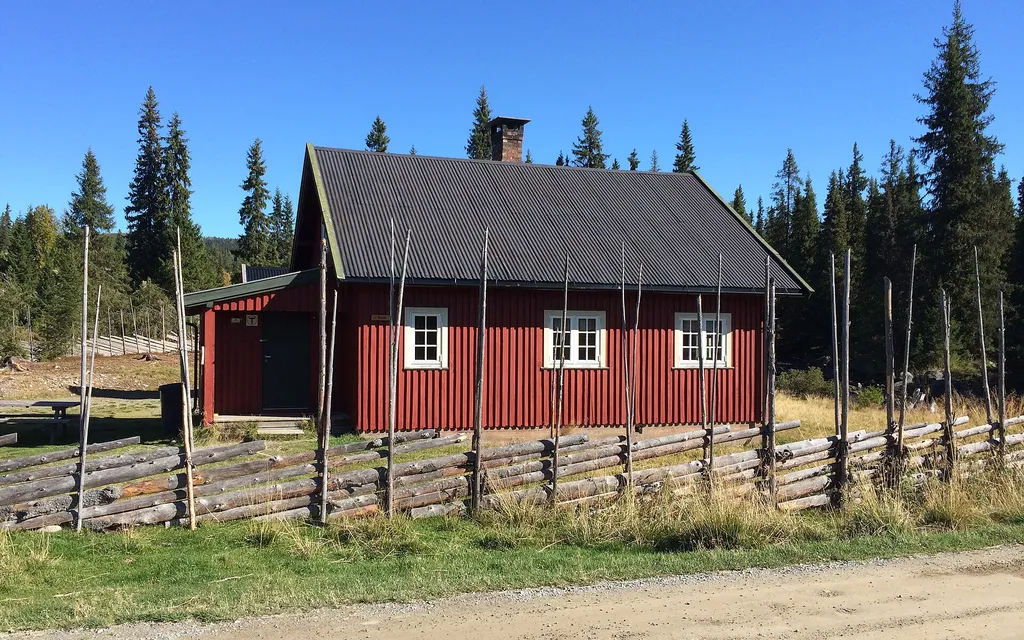
Den Norske Turistforening, DNT, was founded in 1868 and today has more than 500 cabins and thousands of kilometres of marked trails. The trails are marked with a red T painted on rocks and cairns.
There are three kinds of cabin. At staffed cabins you get dinner and breakfast and can sleep in a bed without bringing food. Self-service cabins are locked with the DNT key and have a store of tinned and dried food; you pay for what you use. Unstaffed cabins have no food, so you have to bring everything yourself.
You get the key by becoming a member and paying a deposit. Staying overnight is cheaper for members, and most Norwegians who hike a lot are one. In the cabin the rules are simple: take your shoes off in the hall, wash up after yourself, and sign the cabin book before you leave.
The mountain code and the weather
Fjellvettreglene are nine simple rules for staying safe in the mountains. They were written in 1952 and last revised in 2016. The most quoted is the last one: «Vend i tide, det er ingen skam å snu» – turn back in time, there is no shame in turning around. Others are about planning your trip and telling someone where you are going, adapting the trip to your ability and the conditions, paying attention to weather and avalanche warnings, and carrying equipment even on short trips.
The weather changes quickly, especially in Western Norway and in the mountains. A sunny morning in Jotunheimen can turn into fog and sleet by lunchtime, even in July. Check yr.no before you go, and read the avalanche warning on varsom.no in winter.
That is why Norwegians have a saying you will hear often: «Det finnes ikke dårlig vær, bare dårlige klær» – there is no bad weather, only bad clothes. Wear wool next to your skin, a warm middle layer and a windproof shell on the outside. Cotton gets cold when it is wet. And in your backpack: map, compass, extra food, a thermos, something to sit on – and a charged phone.
Born with skis on their feet
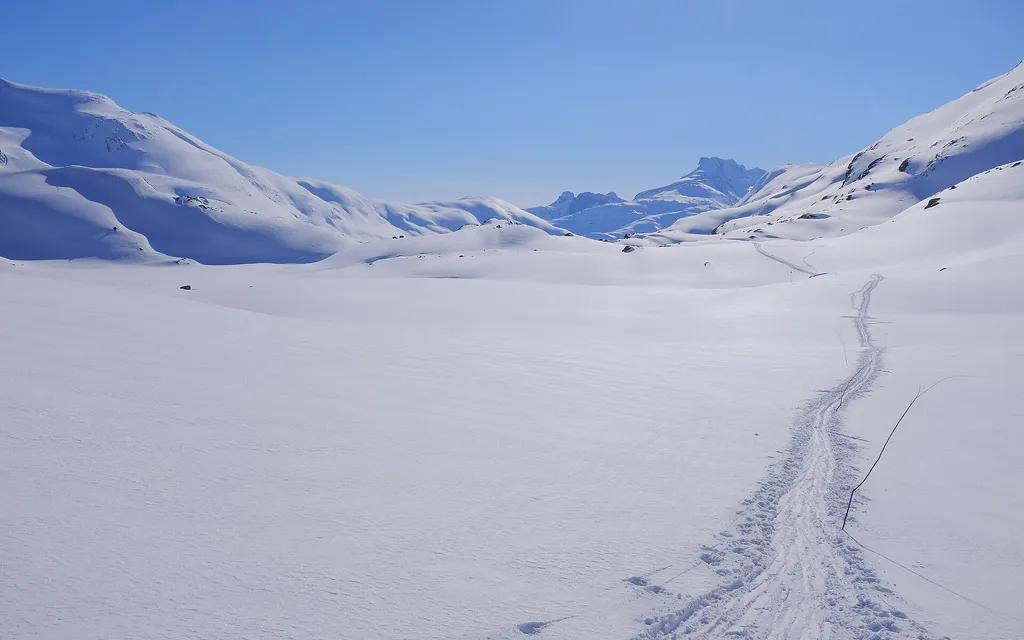
Norwegians like to say they are «født med ski på beina», born with skis on their feet. It is almost true: many children ski before they start school, and kindergartens have ski days. Telemark is seen as the cradle of modern skiing, and Sondre Norheim from Morgedal is known for developing bindings and skis in the 1800s.
For most people skiing means cross-country, not downhill. In Oslo the floodlit tracks start right at the metro's end stations in Nordmarka, for example Frognerseteren and Sognsvann. An ordinary winter evening after work might be an hour on the lit track with a head torch.
Ut på tur, aldri sur – out on a trip, never grumpy. It rhymes in Norwegian, and it is a kind of life philosophy. You don't have to be fast. What matters is getting outside, taking a break on a rock with an orange and hot chocolate, and saying «Hei!» to the people you meet on the track. On a hike it is completely normal to greet strangers, even though you would never do it on the bus.
Useful phrases
- Ut på tur, aldri sur!Out on a trip, never grumpy!
- Det finnes ikke dårlig vær, bare dårlige klær.There is no bad weather, only bad clothes.
- Vend i tide, det er ingen skam å snu.Turn back in time – there is no shame in turning around.
- Skal vi gå en tur i helga?Shall we go for a walk at the weekend?
- Hvor langt er det til hytta?How far is it to the cabin?
- Er det lov å telte her?Is camping allowed here?
- Kan du smøre skiene mine?Can you wax my skis?
- Hva sier værmeldingen?What does the weather forecast say?
More about Norway

Norwegian dialects: why everyone speaks differently
Read the article →
Bokmål and Nynorsk: two written languages in one country
Read the article →
Small talk in Norwegian: weather, cabins and ‘takk for sist’
Read the article →
Working life in Norway: packed lunch, July holidays and a flat structure
Read the article →
Public holidays and time off in Norway: red days, fellesferie and holiday pay
Read the article →
The Norwegian year month by month: from dark January to New Year fireworks
Read the article →Skiing for beginners: cross-country, downhill and how to get started
Read the article →Hiking in Norway: a practical guide from planning to the cabin
Read the article →Free time in Norway: cabins, knitting, fishing and club life
Read the article →
Holidays in Norway: 17 May, Christmas, Easter and Midsummer
Read the article →
Everyday Norwegian food: from brown cheese to Taco Friday
Read the article →
The Sámi and Northern Norway: language, culture and Arctic light
Read the article →
Norway's regions, counties and cities
Read the article →
A short history of Norway
Read the article →
NAV, healthcare and tax: what you need to know
Read the article →
Everyday life in Norway: housing, prices and winter
Read the article →
Kindergarten and school in Norway
Read the article →
Art, literature and music
Read the article →
Sport in Norway
Read the article →
Everyday etiquette in Norway
Read the article →
Office culture in Norway: how an ordinary workday really works
Read the article →
Business in Norway: big companies, social partnership and business culture
Read the article →
Job hunting in Norway: from job ad to employment contract
Read the article →
Starting your own business in Norway: ENK, AS and the paperwork you need
Read the article →
Dating and relationships in Norway: from the first coffee to samboer
Read the article →
Norway's economy explained: oil, the krone, interest rates and jobs in 2026–2027
Read the article →Salaries in Norway: what people earn and how pay works
Read the article →
What does it cost to live in Norway? Rent, food, electricity and budgets for 2026
Read the article →