
Holidays in Norway: 17 May, Christmas, Easter and Midsummer
If you live in Norway for a year, you will go through four big celebrations. Each has its own food, its own vocabulary and a few unwritten rules. Here is what you need to know to keep up – and to say the right thing at the right time.

17 May – Constitution Day
On 17 May 1814 the Constitution was signed at Eidsvoll. Today the day is not a military parade but a party for children. Every school walks in the barnetog (children's parade) with flags, marching bands and banners, and in Oslo the royal family waves from the palace balcony to the parade coming up Karl Johans gate.
Many adults wear a bunad, the traditional costume from their home district. A bunad can cost more than 30,000 kroner, and people often inherit them. If you don't have one, a nice suit or dress is perfectly normal. In the morning many families have breakfast with friends, and the rest of the day is about hot dogs, ice cream and fizzy drinks – children are often allowed as much ice cream as they want.
You say «Gratulerer med dagen!» to everyone you meet and shout «Hipp hipp hurra!» when the parade passes. If you see teenagers in red or blue overalls, that is the russ – final-year upper secondary students who have been celebrating for weeks.
Christmas – from julebord to Christmas Eve
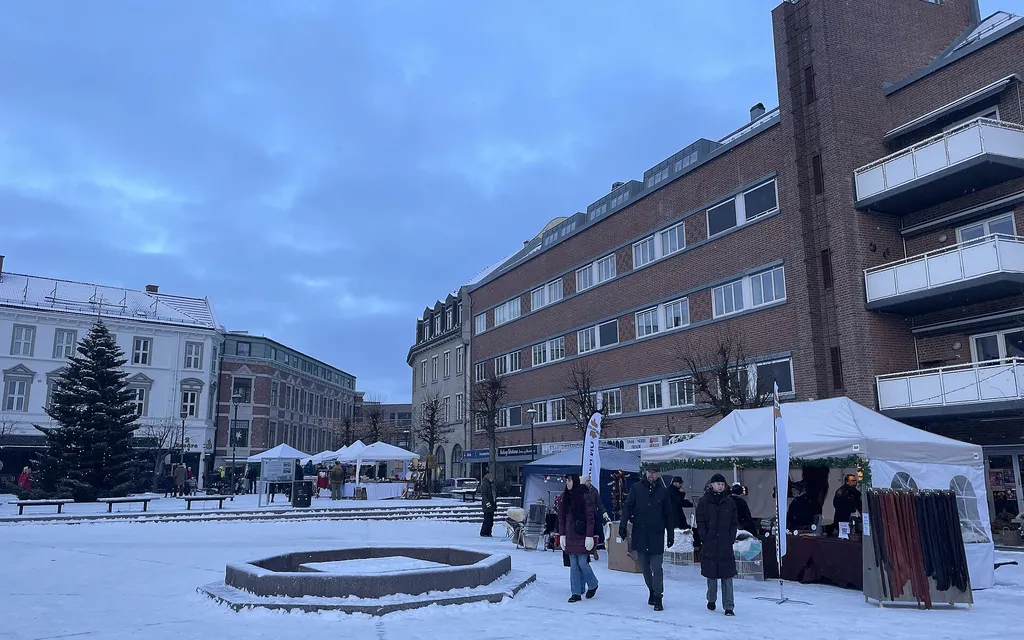
Christmas starts long before December. From mid-November workplaces hold julebord, a Christmas dinner with lots of food, speeches and often alcohol. It is one of the few times Norwegians really let their hair down with colleagues.
The big day is Christmas Eve, 24 December. Shops close early, church bells ring Christmas in at 5 pm, and then the family sits down to Christmas dinner. In Eastern Norway ribbe – roast pork belly with crispy crackling – is most common. In Western Norway many eat pinnekjøtt, salted and dried lamb ribs steamed over birch sticks. After dinner come the presents, often handed out by a «nisse» in the family.
The nisse is a small bearded figure with a red cap. Many people put out a bowl of rice porridge for him in the barn. The porridge is also served for lunch with a hidden almond – whoever finds it wins a marzipan pig. At home many bake «sju slag», seven kinds of Christmas biscuits. You say «God jul!» before Christmas and «Godt nyttår!» during romjula, the days between Christmas and New Year.
Easter – the cabin, Kvikk Lunsj and crime novels
For many Norwegians Easter mainly means time off. Maundy Thursday, Good Friday and Easter Monday are public holidays, and many people take the whole week off. Shops are closed on the holidays, so do your shopping on Wednesday – the queues in the supermarket can get long.
The tradition is to head to the mountains or the cabin and ski in the Easter sun. In the backpack you'll find oranges and Kvikk Lunsj, a chocolate-covered wafer that almost belongs on every ski trip. The mountain safety rules, fjellvettreglene, are often printed on the inside of its wrapper.
A slightly odd Norwegian habit is påskekrim, Easter crime. It started in 1923, when the publishers of a new crime novel placed an advert on the front page of Aftenposten with the headline «Bergenstoget plyndret i natt» (The Bergen train robbed last night). Many readers thought it was real news. Since then every Easter brings crime novels, TV series and even short crime stories on milk cartons. You wish each other «God påske!».
Midsummer and other days off
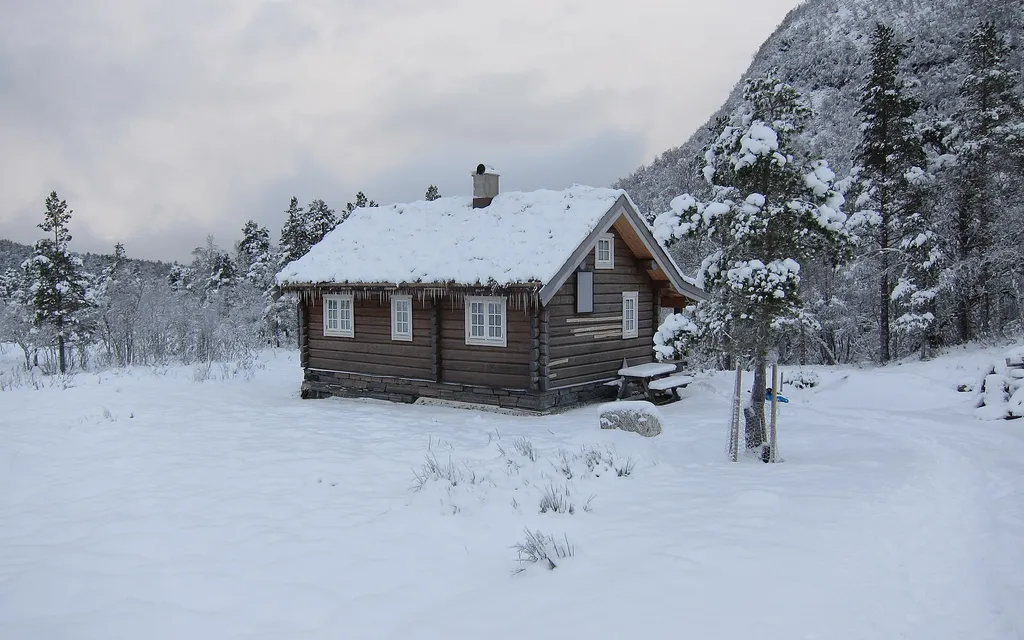
Sankthansaften, Midsummer Eve on 23 June, is not an official day off, but many people gather by the sea or a lake to light a bonfire. It hardly gets dark in the evening, and in Northern Norway the sun does not set at all. Check your municipality's rules before you light a fire – in dry summers it may be banned, and in towns it is often only allowed at set places.
Other public holidays are 1 May (Labour Day with marches and speeches), Ascension Day and Whit Monday. Several of them fall in May, so May can feel like a month of long weekends. A useful word is «inneklemt dag»: a working day squeezed between a holiday and the weekend, which many people take off.
Remember too that Norwegians send few Christmas cards these days, but often a text message. If you are invited to someone's home during a holiday, bring flowers or a small gift, and say «Takk for sist!» (thanks for last time) the next time you meet them.
Useful phrases
- Gratulerer med dagen!Happy 17 May! / Happy birthday!
- Hipp hipp hurra!Hip hip hooray!
- God jul og godt nyttår!Merry Christmas and Happy New Year!
- God påske!Happy Easter!
- Skal du på hytta i påsken?Are you going to the cabin at Easter?
- Hva skal du spise på julaften?What are you eating on Christmas Eve?
- Takk for sist!Thanks for last time!
- Har du bunad?Do you have a bunad?
More about Norway

Norwegian dialects: why everyone speaks differently
Read the article →
Bokmål and Nynorsk: two written languages in one country
Read the article →
Small talk in Norwegian: weather, cabins and ‘takk for sist’
Read the article →
Working life in Norway: packed lunch, July holidays and a flat structure
Read the article →
Public holidays and time off in Norway: red days, fellesferie and holiday pay
Read the article →
The Norwegian year month by month: from dark January to New Year fireworks
Read the article →Skiing for beginners: cross-country, downhill and how to get started
Read the article →Hiking in Norway: a practical guide from planning to the cabin
Read the article →Free time in Norway: cabins, knitting, fishing and club life
Read the article →
Everyday Norwegian food: from brown cheese to Taco Friday
Read the article →
Friluftsliv: the right to roam, DNT cabins and mountain sense
Read the article →
The Sámi and Northern Norway: language, culture and Arctic light
Read the article →
Norway's regions, counties and cities
Read the article →
A short history of Norway
Read the article →
NAV, healthcare and tax: what you need to know
Read the article →
Everyday life in Norway: housing, prices and winter
Read the article →
Kindergarten and school in Norway
Read the article →
Art, literature and music
Read the article →
Sport in Norway
Read the article →
Everyday etiquette in Norway
Read the article →
Office culture in Norway: how an ordinary workday really works
Read the article →
Business in Norway: big companies, social partnership and business culture
Read the article →
Job hunting in Norway: from job ad to employment contract
Read the article →
Starting your own business in Norway: ENK, AS and the paperwork you need
Read the article →
Dating and relationships in Norway: from the first coffee to samboer
Read the article →
Norway's economy explained: oil, the krone, interest rates and jobs in 2026–2027
Read the article →Salaries in Norway: what people earn and how pay works
Read the article →
What does it cost to live in Norway? Rent, food, electricity and budgets for 2026
Read the article →