
Everyday etiquette in Norway
Nobody hands you a list of unwritten rules when you move to Norway. People are too polite to tell you, so you only notice it in the atmosphere. Here are the rules I've learned, some of them the hard way.

At someone's home
Take your shoes off in the hall. Always. That applies even if you're a tradesman or just dropping by, and in many kindergartens and schools too. In winter it's worth having a pair of wool socks without holes.
Norwegians are punctual. If the invitation says seven, people arrive at five past seven, not half past. For dinner bring something small, like flowers, chocolate or a bottle of wine. If it says TMED or «ta med egen drikke», it means exactly that: bring whatever you're going to drink, and take what's left home with you. After the meal you say «takk for maten» (thanks for the food), and the host replies «velbekomme».
Du to everyone
In Norwegian you say «du» to everyone: your boss, your doctor, your children's teacher and the prime minister. The polite «De» has almost disappeared, and if you use it you sound old-fashioned or ironic. First names are used everywhere too. Your boss is Kari, not Mrs Hansen.
That doesn't mean the hierarchy is gone, just that it's hidden. You can disagree with your boss in a meeting, and it's seen as a good thing. But boasting about yourself or how much you earn is still bad form. Janteloven, the idea that you shouldn't think you're better than anyone else, runs deep.
On the bus and in the queue
On buses and the metro it's quiet. People prefer to sit alone, and if there are empty double seats it's odd to sit down next to a stranger. Keep phone calls short and low. Small talk with strangers isn't common, and that doesn't mean people are unfriendly. They just don't want to bother you.
At the pharmacy, the post office, Nav and the deli counter you take a number ticket (kølapp) from the machine and wait for your number to come up. Anyone who jumps the queue won't get a comment, only looks. And when you're getting off the bus, press the stop button in good time.
Takk for sist and other small words
Norwegians say thank you for almost everything. Next time you meet someone you've spent time with, you say «takk for sist», thanks for last time. That holds even if it was a boring meeting three weeks ago. After a visit many people send a message the next day: «Takk for i går!» (thanks for yesterday).
Compliments are given rarely and in a fairly low-key way. «Så fin genser» (what a nice sweater) or «Det var godt gjort» (well done) is a lot. Reply with a simple «takk», not with a long explanation that the sweater was cheap. Big words like «fantastisk» are used carefully, so when a Norwegian says something was «helt greit» (perfectly fine), it may actually be praise.
Money: Vipps and splitting the bill
When a group goes out to eat, one person often pays and the others Vipps their share. Vipps is the app everyone uses to send money by phone number, so download it early. It's completely normal to Vipps someone 87 kroner for a beer. Nobody thinks it's petty.
Tips aren't expected the way they are in many other countries, because waiters have a proper wage. Many people round up or leave a little if the service was good. Å spleise means to share a cost, for example for a present for a colleague. Then you'll often get a message: «Vi spleiser på gave til Ola, vipps 100 kroner til meg» (we're chipping in for a gift for Ola, Vipps me 100 kroner).
Bottle deposits, recycling and birthdays
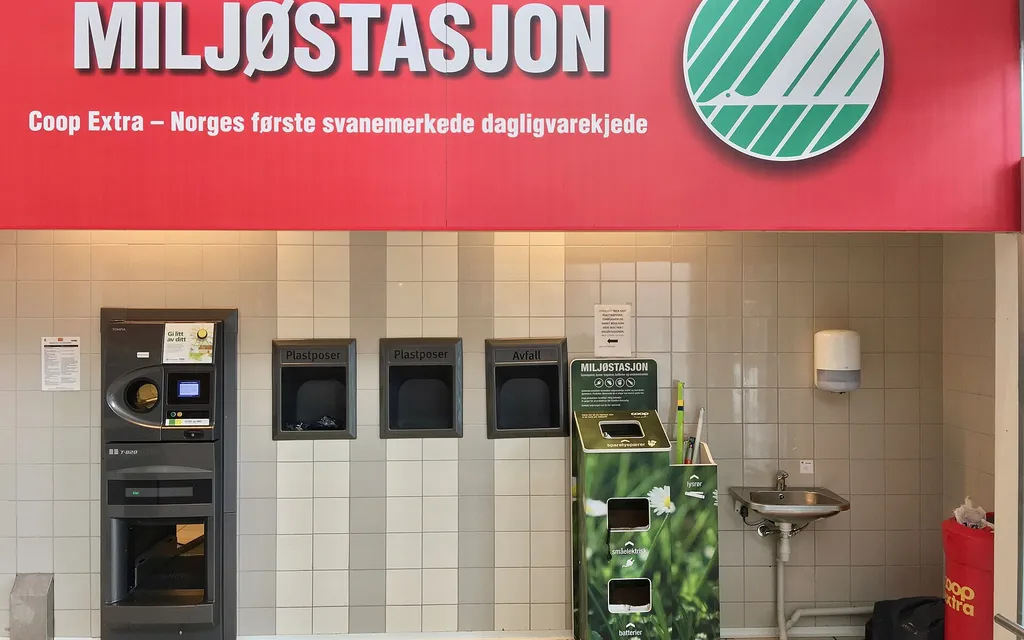
Bottles and cans with a deposit mark (pant) go into the machine at the supermarket. You get two or three kroner each, depending on the size, plus a slip you can use at the checkout. At home most people sort food waste, plastic, cardboard and residual waste into different bags and bins. The rules vary from kommune to kommune, so check the website. The neighbours will notice if you get it wrong.
Birthdays are celebrated, especially the round ones: 30, 40, 50. At work the person whose birthday it is often brings cake for colleagues, not the other way round. Presents tend to be practical and not too expensive. A gift card, a good book or something homemade works fine, and the most important part is the card with a personal message.
Useful phrases
- Takk for sist!Thanks for last time!
- Takk for maten.Thanks for the food.
- Skal jeg ta av meg skoene?Should I take my shoes off?
- Jeg vippser deg.I'll send you the money on Vipps.
- Skal vi spleise?Shall we split it?
- Hvilket nummer er det nå?Which number is it now?
- Er det ledig her?Is this seat free?
- Gratulerer med dagen!Happy birthday!
- Så fin du er i dag!You look great today!
- Takk for i går!Thanks for yesterday!
More about Norway

Norwegian dialects: why everyone speaks differently
Read the article →
Bokmål and Nynorsk: two written languages in one country
Read the article →
Small talk in Norwegian: weather, cabins and ‘takk for sist’
Read the article →
Working life in Norway: packed lunch, July holidays and a flat structure
Read the article →
Public holidays and time off in Norway: red days, fellesferie and holiday pay
Read the article →
The Norwegian year month by month: from dark January to New Year fireworks
Read the article →Skiing for beginners: cross-country, downhill and how to get started
Read the article →Hiking in Norway: a practical guide from planning to the cabin
Read the article →Free time in Norway: cabins, knitting, fishing and club life
Read the article →
Holidays in Norway: 17 May, Christmas, Easter and Midsummer
Read the article →
Everyday Norwegian food: from brown cheese to Taco Friday
Read the article →
Friluftsliv: the right to roam, DNT cabins and mountain sense
Read the article →
The Sámi and Northern Norway: language, culture and Arctic light
Read the article →
Norway's regions, counties and cities
Read the article →
A short history of Norway
Read the article →
NAV, healthcare and tax: what you need to know
Read the article →
Everyday life in Norway: housing, prices and winter
Read the article →
Kindergarten and school in Norway
Read the article →
Art, literature and music
Read the article →
Sport in Norway
Read the article →
Office culture in Norway: how an ordinary workday really works
Read the article →
Business in Norway: big companies, social partnership and business culture
Read the article →
Job hunting in Norway: from job ad to employment contract
Read the article →
Starting your own business in Norway: ENK, AS and the paperwork you need
Read the article →
Dating and relationships in Norway: from the first coffee to samboer
Read the article →
Norway's economy explained: oil, the krone, interest rates and jobs in 2026–2027
Read the article →Salaries in Norway: what people earn and how pay works
Read the article →
What does it cost to live in Norway? Rent, food, electricity and budgets for 2026
Read the article →