
Skiing for beginners: cross-country, downhill and how to get started
You don't have to grow up in Norway to enjoy the winter here, but your first season goes much better with a plan. Here's which kind of skiing to choose, what gear you need, how to get it cheaply, where to start and how to behave in the tracks.
Langrenn, alpint or telemark?
Langrenn (cross-country) is what most Norwegians mean when they say «gå på ski». You move on your own power through forest and over mountains, on long, narrow skis where only the toe of the boot is fixed. Alpint (downhill) is the kind most people know from abroad: a lift takes you up, you ski down, and you pay for a lift pass (heiskort). Telemark is downhill with a free heel and a deep knee bend in every turn. It's hard to learn, so save it for later.
Cross-country has two techniques. Klassisk (classic) is the postcard version: the skis run in two parallel grooves (sporet), and you push off with one leg at a time. Skøyting (skating) looks like ice skating on skis and is done on the wide, flat lane beside the grooves. It's faster, but demands more strength and balance and uses different skis, boots and longer poles.
If you're an adult beginner, start with classic. It's easier to learn, works on almost every trail, and it's what colleagues mean when they invite you on a Sunday trip. Downhill is a good second choice if your children want to join their classmates on the slopes.
The gear: what you need and what you can skip
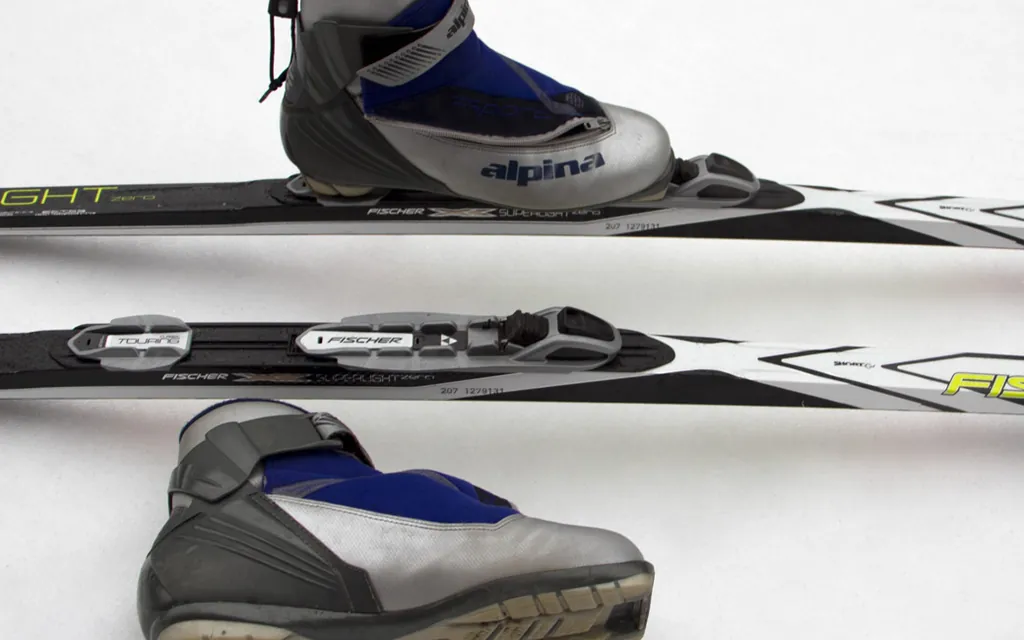
For classic you need skis, boots, poles and bindings that match the boots. Most new gear uses the NNN family of systems, but older second-hand boots may be SNS, which won't fit. Take your boots along when you buy skis.
Cross-country skis are chosen by your weight more than your height, because the camber (spenn) has to match how heavy you are. Tell the shop your real weight, not the one you'd like. Classic poles should reach roughly to your armpit; skating poles are longer, about to your chin.
You will sweat, so dress for a run, not for the bus stop: wool next to the skin, a thin sweater or fleece, a windproof jacket, thin gloves and a hat. Put a warm jacket and a thermos in a small backpack for the breaks.
Rent, borrow or buy second-hand
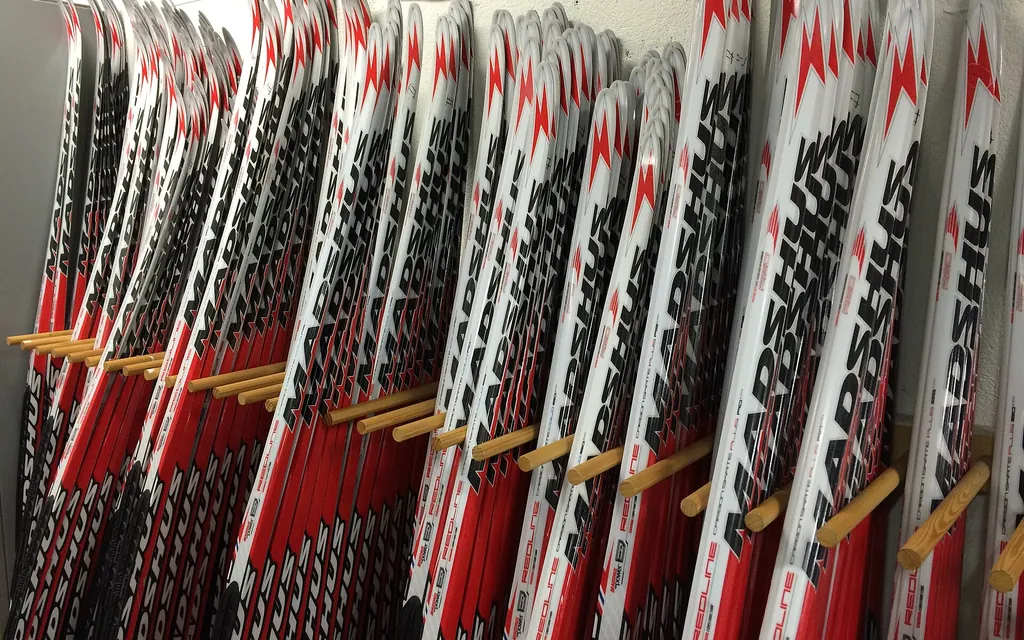
Don't buy a full new set before you know you like it. BUA lends out skis and other outdoor gear for free in many municipalities; you find the nearest branch and book in the BUA app. Alpine resorts and some sports shops rent out complete sets by the day.
Every autumn, sports clubs hold ski markets (skimarked) where used skis change hands cheaply, and finn.no is full of skis from September. Fretex and other second-hand shops sometimes have skis and boots too. Check that the base has no deep scratches, that the skis aren't twisted and that the boots fit the bindings.
For a beginner, felleski (skin skis) are the easiest option. A strip of mohair or synthetic skin under the foot gives grip without grip wax. They glide a little slower than perfectly waxed skis, and the skin needs a spray of skin care now and then so it doesn't ice up, but they save you a lot of fuss.
Where to take your first strides
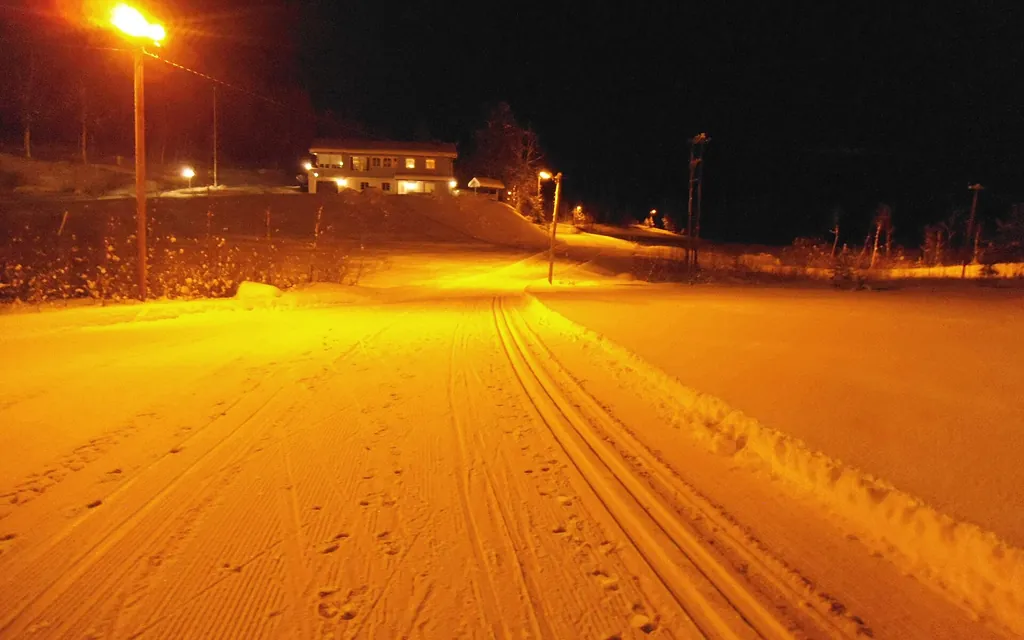
Lysløyper, floodlit trails, are a beginner's best friend: short loops, lit until late evening and close to where people live. According to VisitOslo, the Oslo forests have more than 2,600 km of prepared trails, about 90 km of them lit. Take metro line 1 to Frognerseteren or line 5 to Sognsvann and you're in the tracks within minutes. On line 1 you also pass Holmenkollen, where the ski jump and the ski museum are a short walk from the station. Sognsvann–Ullevålseter, which Skiforeningen calls Norway's most used ski trail, is wide and gentle but crowded on sunny Sundays.
Before you go, check when the trail was last groomed: Skiforeningen's map covers the Oslo forests, skisporet.no much of the country. Look at the colour on the trail map too: green is easy, blue moderate, red demanding, black very demanding. Start with green loops of two to five kilometres.
For downhill, Skimore Oslo at Tryvann, the former Oslo Vinterpark, is a short walk or shuttle bus from Voksenkollen station on line 1. Big resorts such as Trysil, Hemsedal and Hafjell have ski schools with beginner areas. Skiforeningen runs cross-country courses for adults, some in English, and one weekend course saves you a season of bad habits.
Waxing basics without the stress
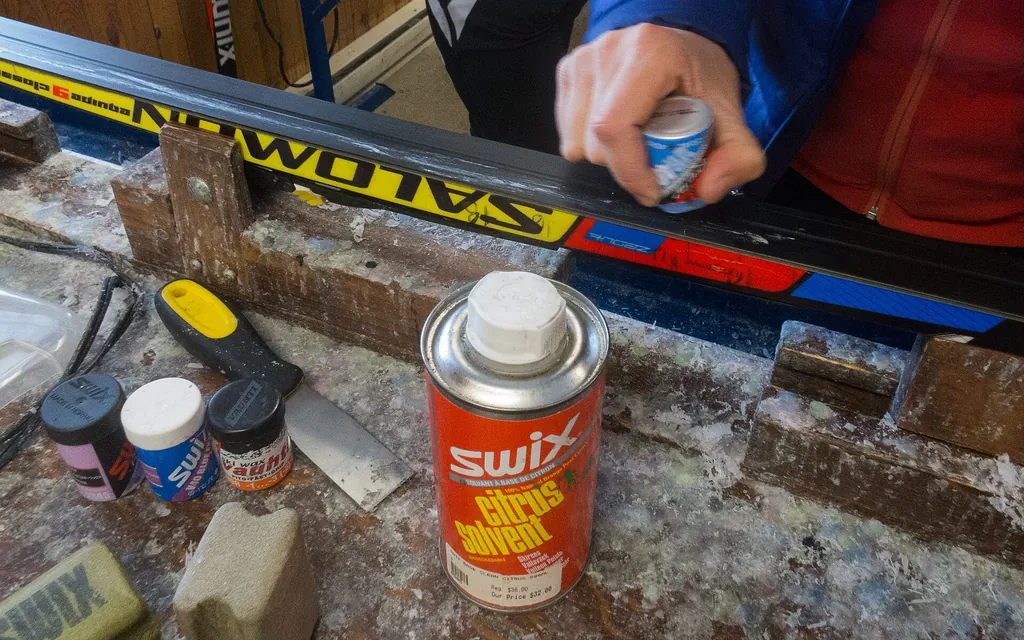
Waxable classic skis have a grip zone (festesonen) under the foot and glide zones at the front and back. Grip wax (festevoks) goes under the foot, glide wax on the tips and tails. Skating skis and skin skis only need glide wax.
The rule of thumb for grip wax: the colder it is, the harder the wax. Green and blue are for cold, dry snow, violet and red for around zero. Klister, a sticky paste in a tube, is for icy trails and old or wet snow. The temperature range is printed on every tin. Rub on thin layers, smooth them with a cork and test: if you slip backwards, add a layer or choose a slightly warmer wax; if snow clumps under the skis, you've gone too warm.
Fluorinated wax is banned in competitions, and Swix, the best-known Norwegian brand, stopped selling it in 2020, so ordinary glide wax is enough. Sports shops will prepare your skis for a fee. And if you're unsure, ask the person next to you at the trailhead: «Hva har du smurt med?» gets almost any Norwegian talking to a stranger.
Trail etiquette: how not to annoy anyone
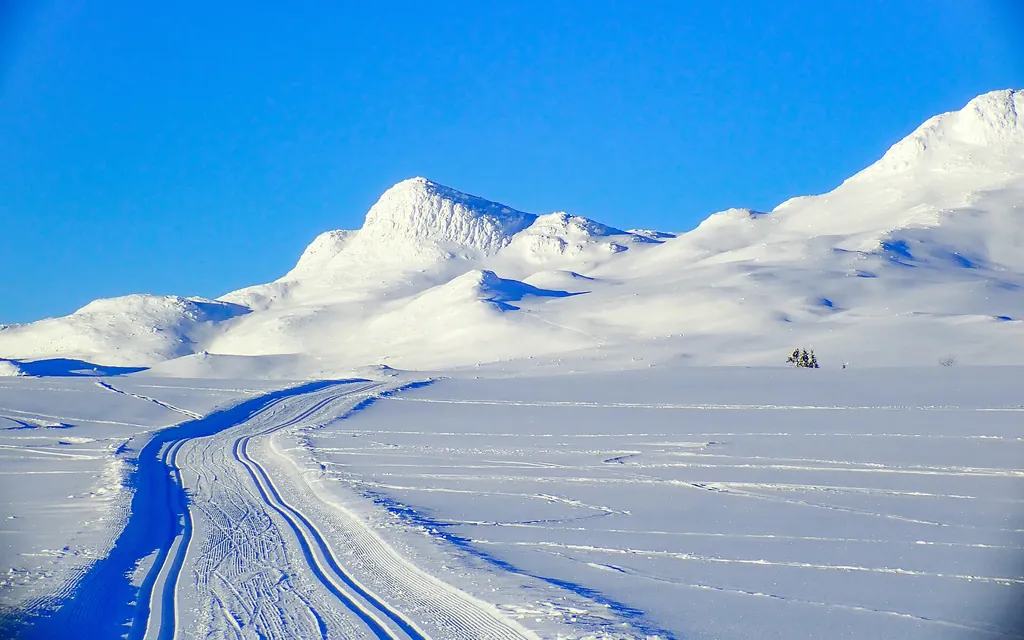
Keep to the right. On a double track, use the right-hand grooves and leave the left free for people coming the other way. Where there's a classic track and a skating lane, the same rule applies, and don't skate in the classic grooves: it ruins them for everyone else.
Stop at the side, never in the grooves, and especially not at the bottom of a hill or in a bend. Don't walk on foot in the trails; boot prints leave dangerous holes. If someone behind you calls «Løype!» or «Spor!», they want to pass: step aside to the right, it isn't rude. Rules for dogs vary, so check them locally and pick up after your dog.
Your first season will be humbling. Accept it, take the short loop once more and stop at a café cabin for waffles and hot chocolate. In March, when the sun is back and the tracks are fast, you'll understand why Norwegians talk about skiing all winter.
Useful phrases
- Hva har du smurt med i dag?What wax are you using today?
- Jeg er nybegynner, så jeg tar det rolig.I'm a beginner, so I'm taking it easy.
- Hvor kan jeg leie ski?Where can I rent skis?
- Når ble løypa kjørt opp sist?When was the trail last groomed?
- Skiene mine glipper bakover.My skis keep slipping backwards.
- Kan jeg få komme forbi?Can I get past?
- Passer disse skoene til bindingene?Do these boots fit the bindings?
- Skal vi ta en runde i lysløypa etter jobb?Shall we do a lap of the floodlit trail after work?
- Jeg trenger heiskort for én dag.I need a lift pass for one day.
More about Norway

Norwegian dialects: why everyone speaks differently
Read the article →
Bokmål and Nynorsk: two written languages in one country
Read the article →
Small talk in Norwegian: weather, cabins and ‘takk for sist’
Read the article →
Working life in Norway: packed lunch, July holidays and a flat structure
Read the article →
Public holidays and time off in Norway: red days, fellesferie and holiday pay
Read the article →
The Norwegian year month by month: from dark January to New Year fireworks
Read the article →Hiking in Norway: a practical guide from planning to the cabin
Read the article →Free time in Norway: cabins, knitting, fishing and club life
Read the article →
Holidays in Norway: 17 May, Christmas, Easter and Midsummer
Read the article →
Everyday Norwegian food: from brown cheese to Taco Friday
Read the article →
Friluftsliv: the right to roam, DNT cabins and mountain sense
Read the article →
The Sámi and Northern Norway: language, culture and Arctic light
Read the article →
Norway's regions, counties and cities
Read the article →
A short history of Norway
Read the article →
NAV, healthcare and tax: what you need to know
Read the article →
Everyday life in Norway: housing, prices and winter
Read the article →
Kindergarten and school in Norway
Read the article →
Art, literature and music
Read the article →
Sport in Norway
Read the article →
Everyday etiquette in Norway
Read the article →
Office culture in Norway: how an ordinary workday really works
Read the article →
Business in Norway: big companies, social partnership and business culture
Read the article →
Job hunting in Norway: from job ad to employment contract
Read the article →
Starting your own business in Norway: ENK, AS and the paperwork you need
Read the article →
Dating and relationships in Norway: from the first coffee to samboer
Read the article →
Norway's economy explained: oil, the krone, interest rates and jobs in 2026–2027
Read the article →Salaries in Norway: what people earn and how pay works
Read the article →
What does it cost to live in Norway? Rent, food, electricity and budgets for 2026
Read the article →