
Small talk in Norwegian: weather, cabins and ‘takk for sist’
Norwegians have a reputation for being quiet, but that is only half true. They are happy to chat – just not with strangers on the bus. Here are the topics, phrases and unwritten rules that make it easier to get a conversation going.

The weather – the safest topic
In a country where it can be minus twenty in Karasjok and plus five in Bergen on the same day, everyone has an opinion about the weather. ‘Fint vær i dag!’ (Nice weather today!) or ‘For et vær!’ (What weather!) is a perfectly normal way to open a conversation at the coffee machine. Answer with something concrete: ‘Ja, endelig sol. Jeg tok sykkelen i dag.’ (Yes, sun at last. I cycled today.)
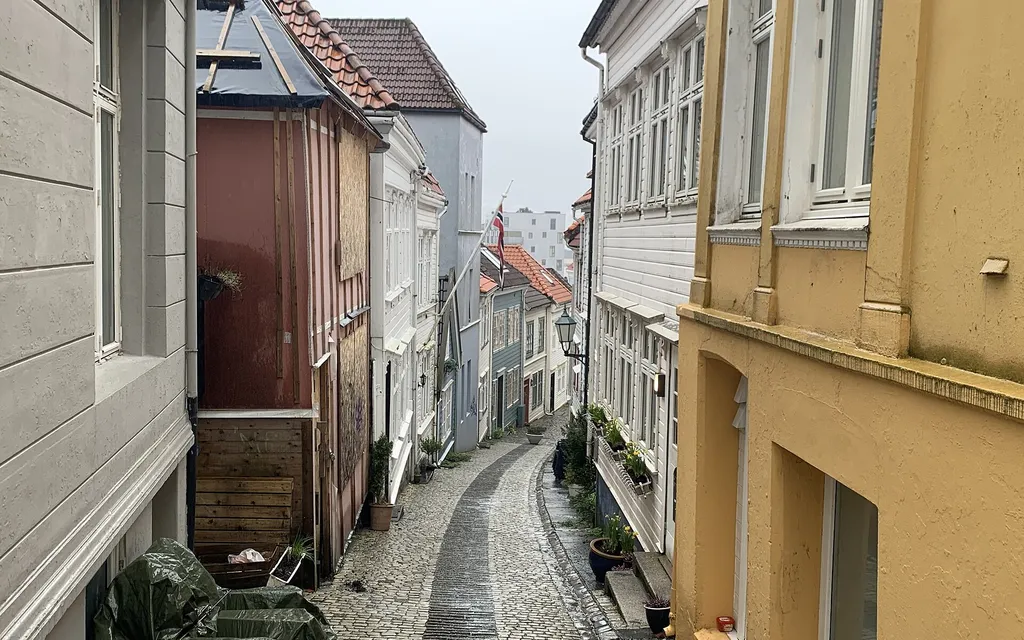
In Bergen it rains more than 200 days a year, and locals like to joke about it themselves. You will certainly hear ‘Det finnes ikke dårlig vær, bare dårlige klær’ – there is no bad weather, only bad clothes. It is half a joke and half a philosophy. Kindergarten children are outside in all weathers, and a Norwegian colleague will give you a strange look if you say it is too cold for a walk at minus five.
Winter has its own phrases: ‘Nå er det glatt ute’ (It’s slippery outside now) and ‘Har du byttet til vinterdekk?’ (Have you changed to winter tyres?). In spring, a lot of the talk is about when the snow will go and when you can sit outside again.
The cabin and the weekend
There are over 400,000 holiday homes in Norway, and the hytte (cabin) is almost a national topic. On Friday colleagues ask ‘Skal du noe i helga?’ (Doing anything this weekend?), and the answer is often ‘Vi skal på hytta’ (We’re going to the cabin). It may be in the mountains near Geilo or Hafjell, by the sea in Hvaler, or deep in the forest without electricity or running water.
On Monday comes the opposite question: ‘Hadde du en fin helg?’ (Did you have a nice weekend?). Nobody expects a long story. A couple of sentences will do: ‘Ja, vi var på tur i Nordmarka, og så slappet vi av.’ (Yes, we went hiking in Nordmarka and then relaxed.) It is completely fine to say you stayed at home and watched series.
If someone invites you to their cabin, it is a sign of trust. Ask what to bring – often bed linen and food – and expect to help with chopping wood, carrying water or cleaning before you leave.
‘Takk for sist’ and ‘takk for maten’
Norwegians say thank you a lot, and some of their thank-you phrases hardly exist in other languages. ‘Takk for sist’ means ‘thanks for the last time we met’. You say it when you meet someone you have spent time with before, especially after a dinner, a party or a nice trip. If you were at someone’s home on Saturday and run into them at the shop on Tuesday, ‘Takk for sist!’ is the first thing you say. If you forget, your hosts will notice.
‘Takk for maten’ (thanks for the food) is what you say when you have finished eating, whether it is dinner with your in-laws or pizza at a colleague’s place. The reply is ‘Vel bekomme’ (you’re welcome, enjoy). Children learn this early, and many say it to their own family at home too.
At work many people say ‘Takk for i dag’ (thanks for today) when they go home, especially after a meeting or a course. And when you leave after a visit, you can say ‘Takk for meg’ (thanks for having me).
Direct language, personal space and the bus
Norwegian is a direct language. ‘Kan du sende meg rapporten?’ (Can you send me the report?) is polite enough; you don’t need ‘Would you be so kind’. It is not rude, just efficient. At the same time Norwegians are careful about open criticism. If your boss says ‘Det kan vi kanskje se litt mer på’ (Maybe we could look at that a bit more), it often means something has to change.
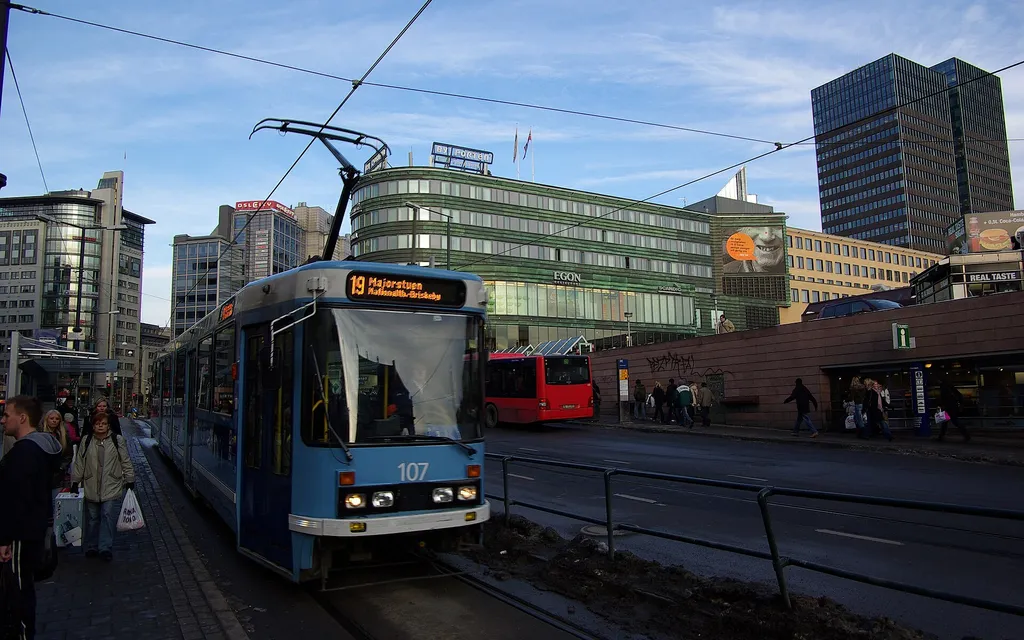
Norwegians like their distance. At the bus stop in Oslo people stand spread out, not in a tight group, and on the bus you prefer a free double seat. Sitting next to a stranger when there is an empty seat elsewhere is unusual. Many put their backpack on the seat beside them, but they move it when the bus fills up.
Starting a conversation with a stranger on the bus can seem odd. The queue at the post office is different, and in the mountains everyone greets each other with a ‘Hei!’. And if a tourist stops you in Bergen, most people are happy to show the way.
How to start a chat with colleagues – and a word on Janteloven
Lunch is the best place to get talking. Sit down at the table even if you don’t know anyone, and ask a simple question: ‘Hvor lenge har du jobbet her?’ (How long have you worked here?) or ‘Har du vært på tur i det siste?’ (Been on any trips lately?). Skiing, football, the children’s activities and new series on NRK are safe topics. Salary, religion and how much someone’s flat cost are better left alone, at least at first.
Don’t wait for Norwegians to take the initiative. Many are shy, not unfriendly. If you have baked buns or brought cake from your home country, that is an excellent ice-breaker. Friday cake (fredagskake) is a tradition in many workplaces.
You may hear about Janteloven, the Law of Jante. It comes from the novel ‘A Fugitive Crosses His Tracks’ (1933) by Aksel Sandemose, and its first rule is ‘You shall not think you are anything special’. In practice it means Norwegians rarely boast. Do talk about your work, but say ‘Det gikk ganske bra’ (It went quite well) rather than ‘I was the best on the course’.
Useful phrases
- Takk for sist!Thanks for last time! (great to see you again)
- Takk for maten!Thanks for the food!
- Vel bekomme.You’re welcome. (reply to ‘takk for maten’)
- Fint vær i dag, ikke sant?Nice weather today, isn’t it?
- Skal du noe i helga?Are you doing anything this weekend?
- Hadde du en fin helg?Did you have a nice weekend?
- Hvor lenge har du jobbet her?How long have you worked here?
- Er det ledig her?Is this seat free?
- Takk for meg!Thanks for having me!
More about Norway

Norwegian dialects: why everyone speaks differently
Read the article →
Bokmål and Nynorsk: two written languages in one country
Read the article →
Working life in Norway: packed lunch, July holidays and a flat structure
Read the article →
Public holidays and time off in Norway: red days, fellesferie and holiday pay
Read the article →
The Norwegian year month by month: from dark January to New Year fireworks
Read the article →Skiing for beginners: cross-country, downhill and how to get started
Read the article →Hiking in Norway: a practical guide from planning to the cabin
Read the article →Free time in Norway: cabins, knitting, fishing and club life
Read the article →
Holidays in Norway: 17 May, Christmas, Easter and Midsummer
Read the article →
Everyday Norwegian food: from brown cheese to Taco Friday
Read the article →
Friluftsliv: the right to roam, DNT cabins and mountain sense
Read the article →
The Sámi and Northern Norway: language, culture and Arctic light
Read the article →
Norway's regions, counties and cities
Read the article →
A short history of Norway
Read the article →
NAV, healthcare and tax: what you need to know
Read the article →
Everyday life in Norway: housing, prices and winter
Read the article →
Kindergarten and school in Norway
Read the article →
Art, literature and music
Read the article →
Sport in Norway
Read the article →
Everyday etiquette in Norway
Read the article →
Office culture in Norway: how an ordinary workday really works
Read the article →
Business in Norway: big companies, social partnership and business culture
Read the article →
Job hunting in Norway: from job ad to employment contract
Read the article →
Starting your own business in Norway: ENK, AS and the paperwork you need
Read the article →
Dating and relationships in Norway: from the first coffee to samboer
Read the article →
Norway's economy explained: oil, the krone, interest rates and jobs in 2026–2027
Read the article →Salaries in Norway: what people earn and how pay works
Read the article →
What does it cost to live in Norway? Rent, food, electricity and budgets for 2026
Read the article →